Krishna Institute of Medical Sciences, Karad — the flagship medical college of Krishna Vishwa Vidyapeeth (Deemed-to-be-University) — is one of the oldest private medical institutions in Maharashtra, with its MBBS programme running continuou…
✅ Sourcing: figures use official counselling records (MCC/state) and institute circulars — cutoffs change every round; reconfirm at allotment. No cash payments; official receipts only.
Quick Answer Krishna Institute of Medical Sciences, Karad — the flagship medical college of Krishna Vishwa Vidyapeeth (Deemed-to-be-University) — is one of the oldest private medical institutions in Maharashtra, with its MBBS programme running continuously since 1984. Founded by the Krishna Charitable Trust, the…
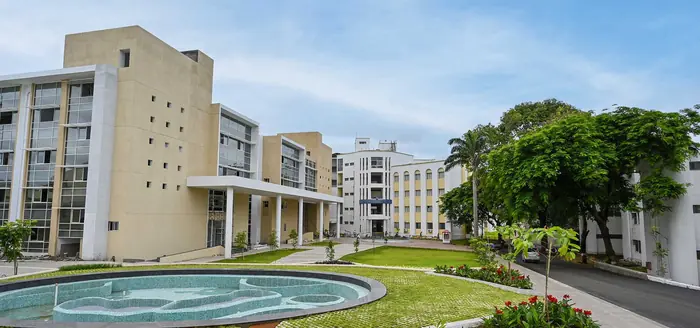
Krishna Institute of Medical Sciences (KVV), Karad — campus (official)
📊 KIMS Karad — Key Facts 2026
Parameter
Detail (2026)
Type
Deemed-to-be-University Medical College
Established
1984 (medical college founded by Krishna Charitable Trust); deemed-university status 2005.
Location
Karad, Maharashtra
Affiliation
Constituent medical college of Krishna Vishwa Vidyapeeth (Deemed-to-be-University), Karad — formerly Krishna Institute of Medical Sciences Deemed University (KIMSDU). Declared a Deemed-to-be-University under Section 3 of the UGC Act on 24 May 2005; renamed Krishna Vishwa Vidyapeeth on 21 November 2022.
Seats
250 MBBS seats (current 2025-26 intake; up from the earlier 200). Category split commonly cited as ~212 General/Management + 38 NRI (85%/15%) — VERIFY against the latest official KVV/KIMS notification, as the last officially published PDF still showed the older 200-seat matrix of 170 General + 30 NR
Admission
100% via NEET-UG merit through MCC (Medical Counselling Committee) centralised Deemed/Paid-seat counselling at mcc.nic.in. No state quota, no management discretion outside MCC, no capitation. NRI/Management category seats also allotted through MCC for deemed universities.
Fees
General/Management tuition ₹24,50,000 per year (2025-26) with a disclosed 7% annual escalation for Years 2-5; NRI tuition US$50,000 per year. One-time Eligibility Fee ₹1,00,000 (non-refundable) + refundable Caution Deposit ₹50,000 + refundable Hostel Deposit ₹25,000 + hostel ₹99,000/year (without me
Cutoff
INDICATIVE only — no fixed closing rank. Deemed/Management-quota NEET reference figures cited by third-party portals for 2025 range roughly from ~317 marks (Management/deemed quota) up to the 380-450+ band depending on round, category and seat type. MCC publishes round-wise allotment results, not a
Hospital
~1,125-bed multispecialty tertiary-care teaching hospital (Krishna Hospital / Krishna Charitable Hospital & Medical Research Centre), NABH-accredited.
KIMS Karad at a Glance: A 1984-Vintage Deemed Medical University in Western Maharashtra
Krishna Institute of Medical Sciences, Karad — the flagship medical college of Krishna Vishwa Vidyapeeth (Deemed-to-be-University) — is one of the oldest private medical institutions in Maharashtra, with its MBBS programme running continuously since 1984. Founded by the Krishna Charitable Trust, the college earned Deemed-to-be-University status under Section 3 of the UGC Act in May 2005, and the parent body was renamed Krishna Vishwa Vidyapeeth (KVV) in November 2022.
The 57-acre campus in Karad, Satara district, sits in the river valleys of western Maharashtra and houses six faculties — Medical, Dental, Nursing, Physiotherapy, Pharmacy, and Science & Technology — sharing one teaching ecosystem. For a family weighing a deemed-route MBBS, the relevant headline is institutional maturity: four decades of MBBS graduates, an NMC-recognised programme, NAAC A+ accreditation at the university level, and a 1,125-bed teaching hospital on campus. Every figure on this page that is drawn from the latest published notification is marked, and where the official document trails the current intake we say so plainly rather than guess.
Affiliation, Recognition & Accreditation: KIMSDU, NMC, NAAC and NIRF Explained
KIMS Karad is not affiliated to a state health-sciences university in the usual sense — it is itself a constituent college of a deemed university (Krishna Vishwa Vidyapeeth, formerly KIMSDU). That distinction matters for admissions, because it means MBBS seats here are filled through the central MCC Deemed-university counselling stream rather than Maharashtra state CET counselling. The MBBS programme is recognised by the National Medical Commission (NMC).
At the university level, KVV holds NAAC 'A+' accreditation (CGPA 3.39 on the 4-point scale per the official site; note that an older published fee notification still carried the previous 'A' grade / CGPA 3.20, which the university has since upgraded). The university is ISO 9001:2015 certified, and its hospital and labs carry NABH and NABL accreditation. On national rankings, KVV has appeared in NIRF — placed in the Pharmacy category (around #67 in 2024) and in the university rank bands in 2025 (Universities band roughly 101-150) — but families should treat any single rank as a snapshot and verify the current year on nirfindia.org and the university's NIRF disclosure page.
MBBS Seats & Intake: 250 Seats Today (Up From 200) — Read the Split Carefully
Current 2025-26 third-party listings consistently report a 250-seat MBBS intake at KIMS Karad, an increase from the 200 seats shown on the institution's earlier published seat-distribution notice. This is the single most important number to reconcile before you commit. The last official fee/seat PDF published on kimskarad.in shows the older matrix — 200 seats split 170 General + 30 NRI.
The widely repeated current figure of 250 seats is generally split about 212 General/Management + 38 NRI, following the standard 85%/15% deemed-university ratio. We have not been able to confirm that exact 212/38 split against a current signed KVV notification, so we label it VERIFY. Practically: NMC intake approvals are revised year to year, so always confirm the live seat matrix for your admission year from the MCC seat matrix (mcc.nic.in) and the university's own admissions notice before building a choice list. A larger intake widens the applicant-per-seat odds for qualified candidates, but it does not change the rule that NEET qualification is mandatory and allotment is by merit through MCC.
KIMS Karad MBBS Fee Structure 2025-26: General/Management and NRI, Line by Line
For 2025-26, current portal listings put General/Management tuition at ₹24,50,000 per year with a disclosed 7% annual escalation applied to tuition for Years 2-5, and NRI tuition at US$50,000 per year. On top of tuition, the published one-time and recurring components are: an Eligibility Fee of ₹1,00,000 (one-time, non-refundable), a Caution Deposit of ₹50,000 (refundable), a Hostel Deposit of ₹25,000 (one-time, refundable), and hostel charges of ₹99,000 per year (without mess; mess billed separately). A General-category Year-1 outlay therefore lands near ₹27.24 lakh all-in before mess, of which roughly ₹75,000 (the two refundable deposits) returns on completion.
NOTE ON SOURCES: the ₹24,50,000 tuition and ₹99,000 hostel figures used here are the current 2025-26 figures, corroborated across Krishna Vishwa Vidyapeeth's current fee notification and multiple aggregator listings. An older fee PDF that circulated on the legacy kimskarad.in domain still showed the previous-era ₹20,87,000 tuition / ₹70,000 hostel / 200-seat matrix — that document is outdated, not a competing live figure. As with any deemed seat, obtain the signed current-year fee notification directly from KVV Karad's admissions office and reconcile every line before transferring funds.
How the 7% Annual Escalation Shapes Your 5-Year MBBS Budget
Deemed-university MBBS is a five-year financial commitment, and the 7% annual tuition escalation at KIMS Karad is the variable that families most often underestimate. The escalation applies to tuition only; the one-time Eligibility Fee and the refundable deposits are paid once, and hostel/mess are governed by separate notifications that can also revise year on year.
Starting from a ₹24,50,000 Year-1 tuition, a straight 7% compounding takes Year 2 to roughly ₹26.2 lakh, Year 3 to about ₹28.0 lakh, Year 4 to about ₹30.0 lakh, and the final clinical year to roughly ₹32.1 lakh — a cumulative tuition of approximately ₹1.41 crore across the programme before hostel, mess, deposits and the eligibility fee. (These projections are arithmetic from the confirmed ₹24.50L base and 7% rate; always reconcile against the signed current-year notification, since deemed fees and the escalation rate can be revised.) The disciplined way to evaluate any deemed seat is to model the full five-year tuition path up front, add recurring hostel/mess, and compare the total against alternative deemed colleges rather than anchoring on the Year-1 sticker price alone.
NRI & Foreign-National Quota: Eligibility, Sponsorship and the US$50,000 Tuition
The NRI category at KIMS Karad — roughly 38 of the 250 seats on the current intake — is open to NRI, OCI and PIO candidates, and to Indian nationals legitimately sponsored by a first-degree NRI relative. Annual tuition is US$50,000, with the same INR-denominated eligibility fee, deposits and hostel components as the General category, and the 7% escalation also applies to the NRI tuition.
The eligibility rule families most often get wrong is the sponsorship definition: under Supreme Court guidelines the NRI sponsor must be a close blood relative (parent, or a first-degree relative such as a grandparent, uncle or aunt abroad), and the sponsor must formally undertake the tuition through a notarised affidavit, with the candidate's NRI status supported by the sponsor's passport, visa and an embassy/consulate certificate. Document defects — not money — are the most common reason NRI candidates lose an otherwise valid seat at the verification stage. NEET qualification remains mandatory for the NRI quota; there is no NEET-exempt route into any Indian MBBS seat.
KIMS Karad MBBS Cutoff 2025 (Indicative NEET Closing Ranks): Why There Is No Fixed Number
There is no single published 'closing rank' for KIMS Karad, and any specific number you see quoted should be read as indicative. Because its MBBS seats are filled through MCC centralised Deemed counselling on NEET-UG All India Rank, the rank at which the last seat closes shifts every year and every round with the seat matrix, the applicant pool, and the category/quota you choose. Third-party portals have circulated a wide range of deemed/management-quota reference figures for 2025 — from around 317 marks at the lower management-quota end up into the 380-450+ band depending on round and seat type — but MCC itself does not maintain a standing closing-rank table; it releases the official seat matrix and round-wise allotment results each session.
The only gate that is fixed is NEET qualification: your scorecard must read 'Eligible' against your category (50th percentile for General/EWS; 40th for SC/ST/OBC; 45th for General-PwD). Below that percentile no quota — General, Management or NRI — can legally place you. Always confirm the live position for your category on mcc.nic.in for the current round. For how AIQ and deemed/management seats interact across rounds, see our NEET counselling AIQ vs state quota guide, and compare KIMS Karad cutoff context with peer deemed colleges such as the Bharati Vidyapeeth Pune MBBS cutoff and DY Patil Pune MBBS cutoff pages.
Clinical Training: The 1,125-Bed Krishna Hospital and Internship
Clinical exposure is the part of medical training that a fee sheet cannot capture, and it is where a four-decade-old campus hospital earns its keep. KIMS Karad's MBBS students rotate through Krishna Hospital (the Krishna Charitable Hospital & Medical Research Centre), an on-campus, NABH-accredited multispecialty tertiary-care teaching hospital with approximately 1,125 beds serving western Maharashtra.
The hospital runs critical-care units, endoscopic and cardiovascular-thoracic surgery, dialysis, cardiology, oncology, urology, neurosurgery, plastic and maxillofacial surgery, and a renal transplant unit, alongside a Level II-B neonatal ICU recognised by the National Neonatology Forum — the breadth of caseload an undergraduate needs to see. The MBBS itself spans 5.5 years: 4.5 academic years plus a one-year Compulsory Rotatory Residential Internship (CRRI), during which interns receive a monthly stipend set by the institution under prevailing NMC/Maharashtra norms (confirm the current stipend figure directly, as it is revised periodically and the college does not publish a standing figure).
How to Apply Through MCC: Step-by-Step for KIMS Karad
Admission to KIMS Karad runs entirely through MCC Deemed-university counselling — there is no separate college entrance test and no off-portal arrangement. The sequence is: (1) Qualify NEET-UG (NTA) and confirm your scorecard reads 'Eligible' against your category. (2) Decide your category — General/Management (~212 seats) for domestic candidates or NRI (~38 seats) for NRI/OCI/PIO or validly sponsored Indian candidates (counts to be confirmed against the live seat matrix).
(3) Register on the MCC portal at mcc.nic.in for the Deemed/Central counselling stream and complete choice-filling, ordering your preference list with the five-year escalating cost built into your budget before you lock choices. (4) On allotment, report to KIMS Karad within the MCC reporting window, complete document verification and biometric formalities, and pay the first-year fee only through official university banking channels. Required documents include the NEET-UG scorecard, Class 10 and 12 mark sheets and certificates, transfer and migration certificates and photo ID; NRI candidates additionally need the sponsor's passport and visa, an embassy NRI-status certificate, and a notarised sponsorship affidavit. Treat any promise of a 'guaranteed' seat outside MCC as a red flag — deemed MBBS seats are allotted only through the MCC portal on merit.
📋 MBBS Eligibility & NEET-UG 2026 Requirements for KIMS Karad
To be admitted to KIMS Karad, you must meet the NMC MBBS eligibility and qualify NEET-UG 2026:
Qualifying exam: Class 12 (10+2) with Physics, Chemistry, Biology/Biotechnology and English from a recognised board.
Minimum marks: at least 50% aggregate in PCB for General (40% SC/ST/OBC, 45% General-PwD), per NMC norms.
NEET-UG 2026: a valid qualifying score — 50th percentile General, 40th SC/ST/OBC, 45th General-PwD.
Age: a minimum of 17 years as on 31 December 2026.
Confirm the exact eligibility against the official NEET-UG 2026 and counselling notifications, as criteria are revised periodically.
🎯 KIMS Karad Admission Process 2026 — Step by Step
All seats are filled on NEET merit through the central MCC Deemed-university counselling (mcc.nic.in) — there is no capitation or donation seat:
Qualify NEET-UG 2026 and note your rank and category.
Register for the central MCC Deemed-university counselling (mcc.nic.in) within the notified window.
Choice filling: list KIMS Karad (and the right category — General/Management/NRI) in your preferences.
Allotment & reporting: seats are allotted strictly on NEET merit across rounds; report for verification and fee payment.
⚠ Anti-tout note: every seat at KIMS Karad is a NEET-merit counselling allotment at the published fee. Any agent promising a guaranteed seat for money is running a scam — never pay above the official fee.
💼 Where Free Counselling Helps at KIMS Karad
You cannot buy a seat — but for a candidate clearing the cutoff, expert counselling materially improves the outcome. FindUrCollege’s free counselling helps you read your NEET rank against KIMS Karad’s realistic category-wise cut-off, choose the right category, build a safe-to-ambitious choice list, and prepare documents correctly. It is guidance for serious aspirants — never a seat purchase.
Government post-matric scholarships for SC/ST/OBC/EWS and minority students, income-linked fee concessions and central/state schemes can help; nationalised and private banks fund MBBS against the admission letter and fee structure, with collateral norms scaling to the (higher, deemed/private) tuition. Compare interest rates, moratorium and processing terms, and ask the KIMS Karad admissions office what institutional support is available. Because deemed/private tuition is substantial, plan the full multi-year cost — including any annual escalation — before committing.
🚀 Career & Higher Studies After MBBS at KIMS Karad
An MBBS from KIMS Karad is NMC-recognised and opens the standard ladder — postgraduate study (MD/MS/diploma) through NEET-PG / NExT, clinical practice and registration, government service, or DNB and overseas (USMLE/PLAB) routes. The clinical exposure at the attached teaching hospital is a real foundation for the PG entrances; deemed universities also run their own PG seats. Plan your internship and PG-exam timeline together once the NMC confirms the NExT schedule.
⚠️ Common Counselling Mistakes to Avoid
A short or over-ambitious choice list — the biggest reason candidates go unallotted.
Confusing the category (General/Management vs NRI) and the very different fees attached.
Paying on an outdated fee figure — always reconcile against the signed current-year notification.
Missing registration / reporting deadlines — one missed date can forfeit a seat and the security deposit.
Falling for “expert admission guidance” agents — every seat is a NEET-merit allotment at the published fee.
❓ Frequently Asked Questions — KIMS Karad 2026
250 MBBS seats (current 2025-26 intake; up from the earlier 200). Category split commonly cited as ~212 General/Management + 38 NRI (85%/15%) — VERIFY against the latest official KVV/KIMS notification, as the last officially published PDF still showed the older 200-seat matrix of 170 General + 30 NRI.
General/Management tuition ₹24,50,000 per year (2025-26) with a disclosed 7% annual escalation for Years 2-5; NRI tuition US$50,000 per year. One-time Eligibility Fee ₹1,00,000 (non-refundable) + refundable Caution Deposit ₹50,000 + refundable Hostel Deposit ₹25,000 + hostel ₹99,000/year (without mess). NOTE: the ₹24.50L tuition / ₹99K hostel are the confirmed current 2025-26 figures; an older KIMSDU PDF on kimskarad.in still showed the previous-era ₹20,87,000 / ₹70,000 / 200 seats, which is outdated rather than a competing live figure
100% via NEET-UG merit through MCC (Medical Counselling Committee) centralised Deemed/Paid-seat counselling at mcc.nic.in. No state quota, no management discretion outside MCC, no capitation. NRI/Management category seats also allotted through MCC for deemed universities.
INDICATIVE only — no fixed closing rank. Deemed/Management-quota NEET reference figures cited by third-party portals for 2025 range roughly from ~317 marks (Management/deemed quota) up to the 380-450+ band depending on round, category and seat type. MCC publishes round-wise allotment results, not a standing closing-rank table. VERIFY current-round position on mcc.nic.in.