
XLRI Jamshedpur MBA (PGDM-BM & HRM) Admission 2027: Fees, XAT Cutoff, Placements
XLRI – Xavier School of Management, Jamshedpur runs two-year, fully residential PGDM programmes in Business Management and Human Resource Management. The programme fee is ₹15.25 lakh a year with hostel and mess charged on top, the Batch 2024-26 median salary was ₹29 lakh, and for an Indian candidate the only way in is XAT 2027 — no CAT, no GMAT for BM or HRM, and in XLRI's own words no management or NRI quota.
- XAT 2027 registration is open on xatonline.in: 15 July to 6 December 2026
- XAT 2027 exam: Sunday, 3 January 2027, 2:00 PM to 5:00 PM · admit card from 20 December 2026 (XLRI labels this date tentative)
- XLRI interviews for BM and HRM: mid-February to mid-March 2027 · offers and waitlist: April 2027 · session begins mid-June 2027
- PGDM (GM) applicants using GMAT or GRE: registration closes 31 December 2026 (6 December if you use XAT)
How we source & how to read this page — every figure comes from XLRI's own admissions page, its AICTE mandatory disclosures for Jamshedpur and Delhi-NCR, the Delhi-NCR fee schedules, its XAT cutoff announcements, its placement reports and the B2K audit, its NIRF 2026 submission and xatonline.in — never an aggregator. Each table names its document and the date we read it (3 September 2026). Check the year beside every changing figure: fees are the 2025-27 sheet, cutoffs are XAT 2026, placements are the Batch 2024-26 and the audited 2023-25. Spotted an error? Tell us on WhatsApp or at support@findurcollege.com — we re-check against the official document and correct the page within 48 hours. Open for the reading rules ↓
- The fee excludes hostel and mess. ₹15.25 lakh per annum is what XLRI prints; the two-year ₹30.6 lakh is XLRI's own disclosure figure, not our multiplication; the 2027-29 fee has not been published and nothing here should be multiplied into a projection.
- Cutoffs are interview-call cutoffs, by stream and gender, and XLRI publishes no final-admit cutoff. A cutoff table on this page is the bar to be called, not the score of the last student admitted.
- Placement figures pool both campuses and both programmes. XLRI publishes no Jamshedpur-only, Delhi-only or BM-versus-HRM split of those report figures; its AICTE disclosures do print a programme-wise minimum, maximum and average on a basis they do not state (see Placements). Plan on the median, not the average or the highest.
- Where two XLRI documents disagree, we print both and name them (the HRM fee, the final-exam date, the seat count, the NIRF median against the report median). We never pick one silently.
- Our full sourcing rules, reviewer roster and dates policy are on the editorial policy page.
College Overview — XLRI Jamshedpur at a Glance
📌 In one line: XLRI is a private, Jesuit-run, autonomous B-school that awards a PGDM (AIU-equivalent to an MBA) on two campuses, Jamshedpur and Delhi-NCR — not a government college, not a university, and with no management quota.
| Field | Details |
|---|---|
| Institute Name | XLRI – Xavier School of Management (Xavier Labour Relations Institute), Jamshedpur |
| Also Known As | XLRI Jamshedpur · XLRI · Xavier Labour Relations Institute · Xavier School of Management · “XLRI JSR” |
| Institute Type | Private, autonomous B-school run by the Xavier Labour Relations Institute, a society registered with the Government of Jharkhand (26 November 2010) and a Jesuit institution (Society of Jesus). AICTE-approved. Awards a PGDM, which the AIU recognises as equivalent to an MBA; there is no affiliating university and it is not a university itself. Not a government college. XLRI's own line: admission “does not involve any Management or NRI Quota” |
| Established | 1949, founded by Fr Quinn Enright SJ; a two-year day programme in Industrial Relations & Welfare from 1953 (the ancestor of today's HRM), the two-year full-time BM from 1968, the present campus inaugurated in 1962 — per XLRI's Heritage page |
| Location | C. H. Area (East), Jamshedpur – 831001, Jharkhand. Second campus: Village Aurangpur, M.E.T. Dadri Toye, Jhajjar, Haryana – 124515 (XLRI Delhi-NCR, which runs PGDM (BM) and PGDM (IEV)). There is no XLRI Bangalore, Mumbai or Kolkata |
| Programmes (full-time, residential) | PGDM (BM), 2 years — Jamshedpur 240 seats and Delhi-NCR 180 · PGDM (BM) International Specialisation — same cutoffs and one unified GD&PI with BM · PGDM (HRM), 2 years — Jamshedpur only, 240 seats · PGDM (GM), 18 months — Jamshedpur, 120 seats · PGDM (IEV), 2 years — Delhi-NCR, 30 seats · PGDM (LSCM), 2 years with Rutgers, 60 seats · FPM and Executive FPM (doctoral). No BBA, no B.Tech, no undergraduate programme — list and seat counts as printed in the Jamshedpur Mandatory Disclosure (September 2025) and the Delhi-NCR Mandatory Disclosure (November 2025); the BM International Specialisation line from XLRI's XAT 2026 cutoff announcement (30 January 2026) |
| Exams Accepted | XAT 2027 for PGDM (BM) and (HRM) — for Indian candidates, XAT only. NRI, PIO, OCI and foreign candidates: XAT or GMAT. PGDM (GM): XAT 2027, GMAT or GRE. CAT is not accepted for any of these programmes |
| Accreditation | NBA for PGDM (BM) and PGDM (HRM) at Jamshedpur (certificate 2023); the Delhi-NCR disclosure prints “NBA Accredited: No” for its PGDM (BM) · AACSB, first accredited 2016 and re-accredited 2021 for 2021-2026 — a term that runs out in 2026; XLRI's accreditations page had posted no renewal when read on 3 September 2026, so check it before quoting AACSB status for the 2027 intake · AMBA, third consecutive accreditation, April 2025, for 2025-2030 · BGA, 2025-2030 · EQUIS: XLRI's own accreditations page says “full membership of EFMD” and does not use the word EQUIS, while EFMD's EQUIS-accredited-schools list includes XLRI (three-year accreditation). AACSB, AMBA and EQUIS are the three often called the “triple crown”; no XLRI or EFMD document supports the “one of only N triple-accredited schools in India” count you will see elsewhere |
| Rankings | NIRF 2025 Management #10, score 70.63 (2024: #9, score 68.13) · Financial Times Masters in Management 2025: #58, up from #65 · FT Global MBA 2025: #83 · QS Masters in Management 2025: band 141-150 (6th in India) · QS ranks the PGDM (GM) 201-250 — the last four as listed on XLRI's Position & Ranking page |
| Students (NIRF 2026, Jamshedpur entity) | 810 students across the two-year PG programmes — 469 men, 341 women · 770 from outside Jharkhand, 38 from within, 2 from outside India · 37 from SC/ST/OBC categories · none on full fee reimbursement from institution funds |
| Faculty | Jamshedpur: 86 permanent, 3 adjunct, 71 visiting · Delhi-NCR: 28 permanent, 2 adjunct, 5 visiting (the two mandatory disclosures) |
| Director | Fr Sebastian George SJ (Jamshedpur mandatory disclosure, September 2025) |
| Institute Code | None to enter — there is no centralised counselling for XLRI; you register on xatonline.in and tick the XLRI programmes you want. Two identifiers you will see on official documents: NIRF ID IR-M-S-132 and AICTE permanent ID 1-11632701 — use them to check that a document is XLRI's, not as codes on a form |
| Admission-cycle status | XAT 2027 registration open until 6 December 2026 (read 3 September 2026); GM via GMAT/GRE until 31 December 2026 |
| Official Website | xlri.ac.in (admissions under “Academic Programmes → Admission Procedure”) · xatonline.in for XAT · xlridelhi.ac.in for the Delhi-NCR campus |
Official source: Mandatory Disclosure, XLRI Jamshedpur, prepared September 2025 (AICTE format, 14 pp; linked from xlri.ac.in/about/mandatory-disclosure); Mandatory Disclosure, XLRI Delhi-NCR, November 2025 (AICTE format, 16 pp; xlridelhi.ac.in/wp-content/uploads/2026/03/XLRI-Delhi-Mandatory-Disclosure-November-2025.pdf); XLRI admissions overview page (xlri.ac.in/academic-programmes/admission-procedure/overview/xat); XLRI Heritage page (xlri.ac.in/about/heritage); XLRI Accreditations page (xlri.ac.in/newsroom/accreditations); EFMD, EQUIS accredited schools list (efmdglobal.org/accreditations/business-schools/equis/equis-accredited-schools); XLRI Position & Ranking page (xlri.ac.in/about/xlri-ranking); NIRF 2025 Management Ranking, Ministry of Education (nirfindia.org/Rankings/2025/ManagementRanking.html); NIRF 2026 Data Capturing System submission, XLRI - Xavier School of Management [IR-M-S-132] (xlri.ac.in/newsroom/nirf/2026) — all read 3 September 2026.
📌 Related pillar guides: MBA Admission Guide · XAT Colleges & Cutoffs · GMAT-accepting B-schools in India
XLRI Jamshedpur MBA Fees 2027: Fee Structure for 2 Years (PGDM-BM, HRM, GM)
📌 In one line: the programme fee is ₹15.25 lakh per year — ₹30.6 lakh for the two-year PGDM (BM) by XLRI's own disclosure — with hostel and mess on top, which XLRI does not price for Jamshedpur; so the honest XLRI MBA cost is ₹30.6 lakh of fee plus an unpublished hostel-and-mess bill, and any “XLRI MBA fees for 2 years with hostel” total you see elsewhere is arithmetic nobody official has printed.
Swipe the table sideways for the reading notes →
| Component | Amount | Reading note |
|---|---|---|
| Programme fee, per annum — PGDM (BM) and PGDM (HRM) | ₹15,25,000 | XLRI's admissions page, verbatim: “Fee: Rs. 15.25 lakh per annum* — *The institute reserves the right to revise the fee [Mess and Hostel expenses would be charged extra]”. The same line is printed under both programmes |
| Two-year programme fee — PGDM (BM) | ₹30,60,000 | The Jamshedpur disclosure (September 2025) prints 30.6 lakh; the Delhi-NCR 2025-27 fee schedule itemises ₹30,60,000; 15.25 × 2 = 30.5. Three official documents agree within ₹10,000. Excludes hostel and mess |
| Two-year programme fee — PGDM (HRM) | ₹15.25 lakh/yr (admissions page and Prospectus 2026) · ₹36.6 lakh (disclosure) | Three XLRI documents now give HRM the same fee as BM; one disclosure does not — see “Why two HRM figures appear” below. Still get the HRM figure in writing before you pay |
| PGDM (GM), 18 months | ₹25.8 lakh (admissions page) · ₹25.9 lakh (disclosure) | Includes single hostel accommodation and mess (XLRI FAQ); family accommodation is ₹70,000 extra with the first instalment; “food, electricity and other personal expenses would be charged extra depending on the type of accommodation”. Fee “may change next session based on the recommendation of Fee Fixation Committee” |
| Delhi-NCR PGDM (BM), 2025-27, all-in | ₹33,72,000 | The figure the Delhi-NCR disclosure prints: programme ₹30,60,000 + student residence ₹2,07,000 + incidentals ₹1,05,000 (of which ₹60,000 is a refundable deposit). Mess is not inside it — it is paid to the mess contractor |
| Delhi-NCR programme fee, 2024-26 batch (history) | ₹28,60,000 | One batch earlier the programme fee was ₹28.6 lakh — a 7.0% rise to ₹30.6 lakh. History, not a projection: the 2027-29 fee has not been published |
| XAT 2027 registration | ₹2,300 + ₹200 per XLRI programme | ₹2,600 for Indian candidates applying to GM through GMAT/GRE; ₹5,000 for NRI/foreign candidates applying through GMAT. Last cycle: ₹2,200 / ₹200 / ₹2,500 / ₹5,000 |
Official source: XLRI admissions overview page (xlri.ac.in/academic-programmes/admission-procedure/overview/xat), PGDM (BM), PGDM (HRM) and PGDM (GM) accordions, 2026-27 text; Mandatory Disclosure, XLRI Jamshedpur, prepared September 2025 (AICTE format, 14 pp; linked from xlri.ac.in/about/mandatory-disclosure), “Fees (in Lakhs)” table; Mandatory Disclosure, XLRI Delhi-NCR, November 2025 (AICTE format, 16 pp; xlridelhi.ac.in/wp-content/uploads/2026/03/XLRI-Delhi-Mandatory-Disclosure-November-2025.pdf); FEE SCHEDULE BM [2025-27 Batch], XLRI Delhi-NCR, signed by the Dean (Administration & Finance), dated 28 March 2025 (xlridelhi.ac.in/wp-content/uploads/2025/11/FEE-STRUCTURE-BM-2025-27-2.pdf); FEE SCHEDULE BM [2024-26 Batch], XLRI Delhi-NCR, dated 27 March 2024 (xlridelhi.ac.in/wp-content/uploads/2025/11/FEE-SCHEDULE-BM-DELHI-2024-2026.pdf); XLRI FAQ page (xlri.ac.in/faq); xatonline.in (XAT 2027 official site: home, /registration, /faq, /xlri) — all read 3 September 2026.
What the fee includes and excludes
| Fee | Includes | Excludes |
|---|---|---|
| Programme fee (₹15.25 lakh per annum) | Tuition, academic support services, library services and the admission-cum-registration fee — the four heads the Delhi-NCR schedule itemises inside the programme fee | Hostel · mess (paid to the contractor) · caution deposit · alumni membership · mediclaim · XAT and XLRI registration fees · personal expenses · non-academic travel (“met by the students”) |
Official source: FEE SCHEDULE BM [2025-27 Batch], XLRI Delhi-NCR, signed by the Dean (Administration & Finance), dated 28 March 2025 (xlridelhi.ac.in/wp-content/uploads/2025/11/FEE-STRUCTURE-BM-2025-27-2.pdf), sections A, B and C, read 3 September 2026. Jamshedpur publishes no itemised sheet; the heads are what the Delhi-NCR schedule shows the same ₹30,60,000 programme fee contains. Also read: XLRI, Admissions Prospectus 2026, 35 pp, page 17 (the joint PGDM(BM)/PGDM(HRM) fee line), read 7 September 2026.
Why two HRM figures appear — ₹15.25 lakh a year against ₹36.6 lakh
XLRI's admissions page prints “Rs. 15.25 lakh per annum” under PGDM (HRM), word for word the line it prints under PGDM (BM) — ₹30.5 lakh over two years by simple doubling. Its Jamshedpur mandatory disclosure of September 2025 prints 30.6 lakh for BM and 36.6 lakh for HRM. Both cannot be true, and neither document explains the other.
A third document now weighs in, and it sides with the lower figure. XLRI's own Admissions Prospectus 2026 carries a single fee line covering both programmes together — “Academic Programme for 2 years PGDM(BM)/PGDM(HRM)” at ₹15.25 Lakhs p.a. It does not print a separate, higher HRM fee anywhere. So the position today is three XLRI documents giving the two programmes the same fee — the admissions page, the prospectus, and the Delhi-NCR schedule's ₹30,60,000 — against one disclosure that does not.
That makes the ₹36.6 lakh the outlier rather than an equal claim, but it does not make it a typo we can wave away: it is a figure XLRI itself filed. If you are applying to HRM, still ask XLRI's admissions office for the fee in writing before you pay a rupee — a ₹6 lakh gap between two of an institute's own documents is exactly the thing to have on record.
The itemised fee sheet XLRI publishes for PGDM (BM) — Delhi-NCR, 2025-27 batch
In one line: the ₹30,60,000 programme fee is tuition ₹18,08,000 + academic support ₹9,26,000 + library ₹2,30,000 + admission ₹96,000, and the Delhi-NCR all-in figure of ₹33,72,000 adds residence and incidentals but still not mess.
Swipe the table sideways for the reading notes →
| Head | Two-year amount | How it is paid | Reading note |
|---|---|---|---|
| Admission-cum-registration | ₹96,000 | Once | Charged inside the first instalment |
| Tuition | ₹18,08,000 | ₹4,06,000 · ₹4,06,000 · ₹4,98,000 · ₹4,98,000 | Year 2 tuition is higher than year 1 — budget it that way |
| Academic support services | ₹9,26,000 | ₹2,44,000 · ₹2,44,000 · ₹2,19,000 · ₹2,19,000 | Nearly a third of the programme fee sits here, not in tuition |
| Library services | ₹2,30,000 | ₹1,15,000 in the 1st and 3rd instalments | Paid once a year |
| Programme fee total | ₹30,60,000 | Instalments ₹8,61,000 · ₹6,50,000 · ₹8,32,000 · ₹7,17,000 | Year 1 ₹15,11,000; year 2 ₹15,49,000. The first cheque is ₹8,61,000 of programme fee plus the ₹1,03,500 residence charge that falls with it — about ₹9.65 lakh, our arithmetic on the schedule's own rows, before the one-time ₹80,000 caution deposit and ₹20,000 alumni membership. Instalment dates in that schedule: 15 November 2025, 10 June 2026, 14 November 2026 (the first by the admission office's deadline) |
| Student residence (single room) | ₹2,07,000 | ₹1,03,500 a year, with the 1st and 3rd instalments | ₹50,000 administrative fee + ₹53,500 room rent per year. Mess is not included |
| Caution deposit | ₹80,000 | Once | ₹60,000 refundable; ₹20,000 non-refundable, covering AC and electricity; above 450 units a year billed at actuals |
| Mediclaim insurance | ₹5,000 | ₹2,500 a year | Two years |
| Alumni membership | ₹20,000 | Once | Lifetime membership, charged up front |
| All-in total | ₹33,72,000 | Sum of the rows above | Exactly the figure the Delhi-NCR disclosure prints; ₹60,000 of it comes back as the refundable deposit; mess is still outside it |
Official source: FEE SCHEDULE BM [2025-27 Batch], XLRI Delhi-NCR, signed by the Dean (Administration & Finance), dated 28 March 2025 (xlridelhi.ac.in/wp-content/uploads/2025/11/FEE-STRUCTURE-BM-2025-27-2.pdf); the ₹33.72 lakh total is the figure printed in Mandatory Disclosure, XLRI Delhi-NCR, November 2025 (AICTE format, 16 pp; xlridelhi.ac.in/wp-content/uploads/2026/03/XLRI-Delhi-Mandatory-Disclosure-November-2025.pdf); both read 3 September 2026. This is the Delhi-NCR sheet for the 2025-27 batch — use it to understand what a ₹30.6 lakh programme fee contains, not as a Jamshedpur bill.
- The 2027-29 fee has not been published as of 3 September 2026. XLRI “reserves the right to revise the fee”; the Delhi-NCR programme fee rose 7.0% between the 2024-26 and 2025-27 batches. Nothing on this page should be multiplied into a projection of the 2027-29 fee.
- “XLRI MBA fees for 1 year” is ₹15.25 lakh, the per-annum figure XLRI prints. XLRI runs no one-year MBA; the shortest full-time programme is the 18-month PGDM (GM) at ₹25.8 lakh, which XLRI's FAQ says includes hostel and mess while the admissions-page footnote on the same figure says food and personal expenses are extra (see Hostel).
- “XLRI finance fees” and “XLRI HR fees”: XLRI's admissions page lists no full-time finance programme — a finance career from the Jamshedpur campus runs through PGDM (BM), whose fee is above. XLRI does run a PGDM (Finance) – Blended under XLRI Online Learning (e-Prospectus 2026); it is priced separately and is outside this page. The HR programme is PGDM (HRM), and its fee is the disputed row above.
- Executive and online programmes are priced separately and are outside this page; the doctoral FPM carries a fellowship and no fees; the Executive FPM fee is ₹11,60,000 + tax on the admissions page but ₹12.45 lakh + tax in the e-Prospectus 2026 — two XLRI figures for a programme outside this page.
- Weigh the fee against the median (₹29 lakh, Batch 2024-26), not the highest package.
Scholarships and loans: what XLRI actually publishes
In one line: XLRI lists named donor scholarships in single-digit numbers of awards each, and its NIRF 2026 submission records no student on full fee reimbursement from institution funds — plan on paying the full fee.
| Named award (XLRI Scholarships page) | Value and number of awards | Basis |
|---|---|---|
| Mirae Asset Foundation | ₹5,00,000 per student × 3 (BM Jamshedpur, HRM, BM Delhi — year I); ₹1,75,000 × 3 in year II | Merit-cum-need |
| IDFC First Bank | ₹1,00,000 per student × 8 (BM Jamshedpur) | Merit |
| Aditya Birla Group | ₹1,75,000 × 1 (BM/HRM, year I) | Merit |
| OP Jindal Engineering & Management | ₹1,50,000 × 1 | Merit |
| T Thomas (HUL) | ₹1,00,000 × 1 | Merit |
The prospectus prints a longer list — and one clause on it changes what it means. XLRI's 2026 Admissions e-Prospectus carries 21 named awards, introduced with the words “List of scholarship awarded last year are given below”. That is not a list of what you can apply for. It is a record of what was given out to the previous batch, and XLRI does not say the same awards, the same counts or the same amounts will exist for your year. Treat it as an indication of scale, not an entitlement.
| Award (XLRI e-Prospectus 2026, printed page 46) | Amount and number awarded last year | Reading note |
|---|---|---|
| XLRI Platinum Jubilee (Seniors / Juniors) | 2nd-year tuition up to ₹2,85,000 × 2; 1st-year tuition up to ₹2,55,000 × 2 | The two largest awards, and they are fee waivers with a ceiling, not cash. Read “up to” literally — a cap is not a payment |
| Mirae Asset Foundation | ₹5,00,000 per year × 2 (seniors) and × 3 (juniors) | Note the “/ Year” suffix the prospectus prints on this row and not on most others |
| Aditya Birla Scholarship | ₹3,00,000 per year × 2 seniors and × 2 juniors | Selection is by the company's criteria, not XLRI's |
| Alumni Scholarship | ₹2,00,000 — four each (BM-II/HRM-II), three (GMP), three (Delhi-NCR), plus one each reserved for SC / ST / economically backward students in every one of those groups | The broadest award by number, and the only one with reserved-category places |
| XLRI Class of 1988 Bursary | ₹2,00,000 × 3 (first-year BM/HRM) | Merit-cum-need |
| OP Jindal Engineering & Management | ₹1,50,000 × 1 | Awarded on an online test and interview, not on XAT alone |
| HUL — T Thomas / P M Sinha, Kalyan Ganguly, Rita Narayan (Ethics), Vasantha Sankaran | ₹1,00,000 × 1 each | Several are on “stipulated criteria by the donor”, which the prospectus does not state |
| Joseph M Sciortino (for ST students) | ₹25,000 — number not stated | The count column is a dash, because the award is “distributed equally among the applicants”. How much you receive depends on how many apply |
| Pirojsha Godrej ₹25,000; Geeta Saxena Memorial ₹20,000; Naveen Jain & Distinguished Alumni ₹20,000 | × 1 each |
Two things to be aware of before you count on any of this. First, there is no application route in the prospectus — no deadline, no form, no procedure, no document list and no contact point for scholarships anywhere in it, and “merit-cum-need” is never defined, with no income ceiling and no assessment method stated. Ask the admissions office directly. Second, XLRI's own two documents do not agree on these awards: its Scholarships web page shows Aditya Birla at ₹1,75,000 × 1 and Mirae Asset at ₹5,00,000 × 3 with ₹1,75,000 in year II, while the prospectus shows Aditya Birla at ₹3,00,000 a year × 4 and Mirae Asset at ₹5,00,000 a year. We are not going to pick one. Get the current year's list in writing.
Official source: XLRI Admissions e-Prospectus 2026, “List of Scholarships”, printed page 46 (read line by line, 7 September 2026); XLRI Scholarships page (xlri.ac.in/scholarships); NIRF 2026 Data Capturing System submission, XLRI - Xavier School of Management [IR-M-S-132] (xlri.ac.in/newsroom/nirf/2026), student-strength table (“full tuition fee reimbursement from institution funds”: none); XLRI FAQ page (xlri.ac.in/faq) — read 3 September 2026.
Read the table for what it is: a few dozen awards across an intake of several hundred, most worth ₹1 lakh to ₹1.75 lakh against a ₹30.6 lakh fee. Do not treat XLRI as a school with broad fee waivers. On loans, XLRI's FAQ says that “all major banks, specifically the SBI bank at XLRI Branch, Jamshedpur, cater to the loan requirements of XLRI Students with preferential treatment” — no scheme name, rate or amount is published, so we print none. Approval and terms are the bank's decision; see our education loan guide.
Not sure which fee row applies to you — BM, HRM, GM, Jamshedpur or Delhi-NCR? Ask us on WhatsApp — free counselling, no agent fees.
XLRI XAT Cutoff 2026: Interview-Call Percentiles for PGDM-BM and HRM
📌 In one line: these are the XAT percentiles you needed to be called for GD and PI — for XAT 2026, 94 overall for men and 88 for women and third-gender candidates in BM; in HRM 90-92 for men and 84-87 for women and third-gender candidates — each with three sectional minimums; XLRI publishes no final-admit cutoff, and the XAT 2027 cutoffs will be announced only after the January 2027 scorecards.
XAT 2026 cutoffs — PGDM (BM) and PGDM (BM) International Specialisation, for the 2026-28 batch
Swipe the table sideways for the reading notes →
| Stream and gender | Overall | QA-DI | VALR | Decision Making |
|---|---|---|---|---|
| Engineer — Male | 94 | 85 | 82 | 82 |
| Engineer — Female | 88 | 78 | 78 | 78 |
| Engineer — Third gender | 88 | 78 | 78 | 78 |
| Non-engineer — Male | 94 | 85 | 82 | 82 |
| Non-engineer — Female | 88 | 78 | 78 | 78 |
| Non-engineer — Third gender | 88 | 78 | 78 | 78 |
XAT 2026 cutoffs — PGDM (HRM), for the 2026-28 batch
| Stream and gender | Overall | QA-DI | VALR | Decision Making |
|---|---|---|---|---|
| Engineer — Male | 92 | 80 | 87 | 85 |
| Engineer — Female | 87 | 70 | 82 | 78 |
| Engineer — Third gender | 87 | 70 | 82 | 78 |
| Non-engineer — Male | 90 | 73 | 87 | 85 |
| Non-engineer — Female | 84 | 65 | 82 | 78 |
| Non-engineer — Third gender | 84 | 65 | 82 | 78 |
Official source (the two tables above): “XLRI Announces XAT 2026 Cutoffs Following Scorecard Release”, XLRI announcement dated 30 January 2026 (PDF linked from xlri.ac.in/newsroom/important-announcements), read 3 September 2026. XLRI's own notes in that release: BM and BM International Specialisation carry identical cutoffs and a single unified GDΠ the Rutgers double-masters (LSCM) cutoffs are announced separately; XLRI expects to interview approximately 4,000-4,500 candidates in the 2026-27 cycle.
How to read a row: you need to clear all four numbers in your row, not just the overall. The table is by stream (engineer or non-engineer) and by gender because XLRI sets different bars on purpose — it says so in each release — so a woman from a non-engineering stream is measured against 88/78/78/78 for BM, not against 94/85/82/82. “Third gender” rows appeared for the first time in the XAT 2026 release and are identical to the female rows. A percentile printed here is the bar to be called; XLRI publishes nothing on the percentile of the last student admitted.
Cutoff history — XAT 2025, XAT 2024 and XAT 2023 (same basis: interview-call percentiles)
In one line: the BM overall bar for men has moved 95 → 96 → 96 → 94 across XAT 2023 to 2026, and for women 92 → 91 → 91 → 88 — XAT 2026 was the lowest of the four years on the overall, while the sectional minimums did not fall in step.
XAT 2025 (2025-27 batch) — PGDM (BM)
| Stream and gender | Overall | QA-DI | VALR | Decision Making |
|---|---|---|---|---|
| Engineer — Male | 96 | 88 | 84 | 84 |
| Engineer — Female | 91 | 82 | 80 | 80 |
| Non-engineer — Male | 96 | 88 | 84 | 84 |
| Non-engineer — Female | 91 | 82 | 80 | 80 |
XAT 2025 — PGDM (HRM)
| Stream and gender | Overall | QA-DI | VALR | Decision Making |
|---|---|---|---|---|
| Engineer — Male | 95 | 83 | 90 | 87 |
| Engineer — Female | 90 | 73 | 85 | 80 |
| Non-engineer — Male | 93 | 76 | 90 | 87 |
| Non-engineer — Female | 87 | 68 | 85 | 80 |
Official source (the two tables above): “XLRI Unveils XAT 2025 Cutoffs After XAT 2025 Scorecard Release”, press release (xatonline.in/assets/pdf/Press_Release_XLRI%20Cutoffs.pdf), scorecards released 17 January 2025, read 3 September 2026. Column order in that release: Total, QA, VALR, DM.
XAT 2024 (2024-26 batch) — PGDM (BM)
| Stream and gender | Overall | QA-DI | VALR | Decision Making |
|---|---|---|---|---|
| Engineer — Male | 96 | 86 | 83 | 85 |
| Engineer — Female | 91 | 81 | 80 | 80 |
| Non-engineer — Male | 95 | 85 | 83 | 86 |
| Non-engineer — Female | 90 | 80 | 80 | 81 |
XAT 2024 — PGDM (HRM)
| Stream and gender | Overall | QA-DI | VALR | Decision Making |
|---|---|---|---|---|
| Engineer — Male | 95 | 80 | 90 | 85 |
| Engineer — Female | 90 | 73 | 85 | 78 |
| Non-engineer — Male | 93 | 75 | 90 | 85 |
| Non-engineer — Female | 88 | 68 | 85 | 78 |
Official source (the two tables above): “XLRI Announces XAT 2024 Cutoffs for BM & HRM Programs” (xatonline.in/assets/pdf/XLRI-Announces-XAT%202024-Cutoffs-for-BM-HRM.pdf), scorecards released 20 January 2024, read 3 September 2026. That release expected 2,200-2,800 interviews for the 2024-26 batch.
XAT 2023 (2023-25 batch) — PGDM (BM)
| Stream and gender | Overall | QA-DI | VALR | Decision Making |
|---|---|---|---|---|
| Engineer — Male | 95 | 85 | 75 | 75 |
| Engineer — Female | 92 | 80 | 75 | 75 |
| Non-engineer — Male | 95 | 85 | 75 | 75 |
| Non-engineer — Female | 92 | 80 | 75 | 75 |
XAT 2023 — PGDM (HRM)
| Stream and gender | Overall | QA-DI | VALR | Decision Making |
|---|---|---|---|---|
| Engineer — Male | 93 | 75 | 90 | 75 |
| Engineer — Female | 91 | 65 | 90 | 75 |
| Non-engineer — Male | 90 | 70 | 90 | 75 |
| Non-engineer — Female | 88 | 60 | 90 | 75 |
Official source (the two tables above): “XAT 2023: XLRI Jamshedpur announces cut-off percentile”, XLRI press release (xlri.ac.in/newsroom/press-releases/xat-2023-xlri-jamshedpur-announces-cut-off-percentile), results declared 29 January 2023, read 3 September 2026. Column order note: the 2023 release printed VA, DM, QA, Total; we have re-ordered it to Total, QA, VA, DM to match the later years, so read the headers, not the position, if you open the original.
These three years are corroborated independently: XLRI's Jamshedpur mandatory disclosure of September 2025 prints its own “Cut off Marks” table, and its BM and HRM figures for XAT 2023, 2024 and 2025 match the announcement tables above cell for cell.
PGDM (GM) — the cutoff XLRI's own disclosure prints
In one line: for the 18-month PGDM (GM) the percentile is a filter and the profile is the decision — XLRI's Jamshedpur disclosure labels GM selection “profile-based” and prints XAT 2025 bars of 90 percentile for men and 80 for women, with GMAT 620; three years of managerial or supervisory experience by 31 March 2027 is the hard gate.
| Cycle | XAT percentile printed | GMAT printed | Reading note |
|---|---|---|---|
| XAT 2025 (2025-26 intake) | Men 90 · women 80 — “(Profile-based selection)” | 620 | The latest year XLRI disclosed; the label says the score is not the decision |
| XAT 2024 | “Profile-based selection” — no percentile printed | 620 | The one year with no XAT bar in the disclosure at all |
| XAT 2023 | Men 60 · women 50 | 600 | Far below the BM/HRM bars — GM is a different competition, decided on work experience and profile |
Official source: Mandatory Disclosure, XLRI Jamshedpur, prepared September 2025 (AICTE format, 14 pp; linked from xlri.ac.in/about/mandatory-disclosure), “Cut off Marks” table, row 3 PGDM (General), read 4 September 2026. XLRI's XAT cutoff announcements cover BM and HRM only; this is the only GM bar XLRI prints anywhere we read.
Delhi-NCR campus — a single figure, on a different basis
| Year (Delhi-NCR disclosure) | XAT percentile printed | Reading note |
|---|---|---|
| 2022 | 88.6 | Printed under “Cut off Marks” in the Delhi-NCR disclosure — not the interview-call table above |
| 2023 | 92.7 | Same basis as the row above |
| 2024 | 92.1 | Do not set these against the BM tables: the disclosure does not say whether this is the call bar or the admitted batch, and it is one number, not a stream-by-gender grid |
Official source: Mandatory Disclosure, XLRI Delhi-NCR, November 2025 (AICTE format, 16 pp; xlridelhi.ac.in/wp-content/uploads/2026/03/XLRI-Delhi-Mandatory-Disclosure-November-2025.pdf), “Cut off Marks” row, read 3 September 2026.
XAT 2027 pattern — what the cutoff is computed on
Swipe the table sideways for the reading notes →
| Section | Questions | Reading note |
|---|---|---|
| Verbal Ability and Logical Reasoning (VALR) | about 26 | Counts in the percentile |
| Decision Making (DM) | 21 | Counts in the percentile — the section XLRI sets its highest HRM minimums on |
| Quantitative Aptitude and Data Interpretation (QA-DI) | about 28 | Counts in the percentile |
| General Knowledge (GK) | 20 (8 static + 12 current affairs) | Does not count in the percentile or the cutoff; no negative marking; “considered in the selection process (only for XLRI programs)” |
| Total | 95 questions, 180 minutes | Sunday 3 January 2027, 2:00-5:00 PM; no sectional time limits, all sections open throughout; no essay component is listed for XAT 2027 |
| Marking | +1 correct · −0.25 wrong | You may leave up to 8 questions unanswered free; from the 9th unanswered question, −0.10 each |
If you are working out how to prepare for XAT, start from this official pattern — 95 questions in 180 minutes, GK scored but outside the percentile — and from the XAT Question Papers page on xlri.ac.in, not from a coaching syllabus. XLRI publishes the pattern and past papers, not a preparation plan.
Official source: xatonline.in (XAT 2027 official site: home, /registration, /faq, /xlri), exam-structure section and FAQ, read 3 September 2026. Verbatim on GK: “The GK section has no negative markings. It will not contribute to your overall percentile or cutoff score but will be considered in the selection process (only for XLRI programs).”
Two things this pattern changes about your strategy: the cutoff tables are built on VALR, DM and QA-DI only, so GK cannot rescue a sectional shortfall, but it is seen by XLRI once you are shortlisted; and the skip penalty starts at the ninth unanswered question, so plan your attempts so that blank answers stay at eight or fewer.
If your percentile is below the row that applies to you: paying more cannot create a call, because XLRI has no side door — its own XAT site says “The admissions to XLRI programmes are purely based on merit and does not involve any Management or NRI Quota.” See realistic MBA options for a lower percentile, or send us your XAT sectionals — a counsellor will read them against the right row, free.
XLRI Jamshedpur Placements 2026: Median, Average Package and Highest (Batch 2024-26 and 2023-25)
📌 In one line: plan on the median — ₹29 lakh for the Batch 2024-26 (average ₹31.40 lakh, highest domestic ₹59 lakh, 42.5% PPOs), the same ₹29 lakh median as the audited Batch 2023-25. The average is pulled up by a top decile averaging ₹49.2 lakh, the highest domestic offer fell from ₹75 lakh to ₹59 lakh while the median held, and every figure pools both campuses and both programmes.
Swipe the table sideways for the reading notes →
| Measure | Batch 2024-26 (official page) | Batch 2023-25 (audited report) | Reading note |
|---|---|---|---|
| Students | 576 (both campuses) | 591 participated | Every XLRI placement report pools Jamshedpur and Delhi-NCR, and BM and HRM; only the AICTE disclosures split by programme, on an unstated basis |
| Recruiters | 145 (25 new) | 172 recruiting entities (41 new) | A count of firms, not of offers |
| Offers | 576 domestic + 2 international | 600+ domestic + 2 international | Domestic offers roughly equal the batch; the two international offers are the exception, not the pattern |
| Pre-placement offers | 42.5% of the batch | 34.17% of the cohort | The PPO share rose eight points in one year |
| Median | ₹29 lakh | ₹29 lakh | The number to plan on. Held flat across the two batches |
| Average | ₹31.40 lakh | ₹31.08 lakh | Pulled above the median by the top decile — do not plan on it |
| Top 10% average | ₹49.2 lakh | ₹52.03 lakh | Fell year on year while the median held |
| Top 25% average | ₹44.18 lakh | ₹44.35 lakh | Roughly flat |
| Highest domestic | ₹59 lakh | ₹75 lakh | Fell from ₹75 lakh to ₹59 lakh. XLRI prints it, so we say it; one offer to one student either way |
| Highest international | ₹1.10 crore | ₹1.10 crore | One international offer; not a domestic figure and not convertible into a domestic expectation |
| Sector share of offers | Consulting 36% · BFSI 18% · ITES 15% · Sales & Marketing 12% | Consulting 26% · BFSI 22% · Sales & Marketing 18% | Consulting grew ten points; the 2023-25 report does not print an ITES share |
Official source: XLRI Placement Reports page, “Final Placement Report for XLRI PGDM (BM) and PGDM (HRM) Batch 2024-26” (xlri.ac.in/corporate-relations-and-placement/placement-reports) and XLRI Delhi-NCR Placement page (xlridelhi.ac.in/placement) for the Batch 2024-26 (the report is published on the page; no audit had been published for it as of 3 September 2026); Final Placement Report for XLRI PGDM (BM) and PGDM (HRM) Batch 2023-25 (PDF, 3 pp), linked from the XLRI Placement Reports page for the Batch 2023-25 — all read 3 September 2026. The placement page is at xlri.ac.in/corporate-relations-and-placement/placement-reports · Final Placement Report, Batch 2023-25 (PDF, 3 pp, ungated).
Recruiters XLRI itself names for the Batch 2024-26 — most offers: Accenture Strategy and Consulting, Accenture Technology, Aditya Birla Group, Amazon, American Express, Bajaj Auto, Boston Consulting Group, Deloitte USI, EY Parthenon, HUL, ITC, Kotak Mahindra Bank and PwC; legacy recruiters: Asian Paints, Bain & Company, IndigoEdge, JP Morgan Chase & Co., McKinsey, P&G, TAS and Vector Consulting Group; new final recruiters: Enparadigm, Firstsource, Hilabs, Indigene, IndiGo Airlines, Nexsales, Razorpay, Salescode.ai, Sunsure Energy, Vikram Solar, Wagh Bakri, Waaree and Zomato Hyperpure. For the Batch 2023-25 the report gives two overlapping lists of the firms that made the most offers: its Key Highlights name Accenture Strategy, American Express, Bajaj Auto, Boston Consulting Group, EY Parthenon, HUL, ITC, Kotak Mahindra Bank, PwC India, Reliance and Vector Consulting; its sector-wise section names the six on both — Accenture Strategy, BCG, EY Parthenon, Hindustan Unilever, Bajaj Auto and Vector Consulting. The same 2023-25 report's finance-sector list names Axis Bank, Barclays, Citi, DBS, Deutsche Bank, Goldman Sachs, HSBC, ICICI Bank, Kotak Bank, Mastercard, NPCI and Standard Chartered among the firms that offered finance roles — a list of firms present, not a count of offers.
What the audit of the 2023-25 report counts — and what it does not
In one line: B2K Analytics audited the Batch 2023-25 figures on 16 March 2026 under IPRS revision 2.2 — 590 eligible, 7 opted out, 583 placed through the institute, 582 reported — and no audit exists yet for the Batch 2024-26, so the newer headline is XLRI's own count.
- Salary basis: every offer is categorised under IPRS 2.2 heads; where a break-up was not given it is treated as Maximum Earning Potential. Gratuity is included; ESOP/ESPP counted at first-year vesting, with 25% vesting assumed where the schedule was unspecified; long-term benefits payable after 12 months excluded. Read the median as a maximum-earning-potential figure, not a take-home figure.
- What the auditor could not confirm: 21 offer letters were unsigned (covered by an XLRI declaration); 20 salaries were unverifiable (confirmed by the placement convenor); the function was unverifiable for 137 offers and the location for 13.
- One-time payments (joining bonuses and the like) are averaged over the students who received them, not over the whole batch.
- Scope: the audit covers salary, function and location only — not the report's narrative, recruiter lists or sector shares.
Official source: Audit of Placement Report for 2023-25 placements, B2K Analytics Pvt Ltd, ref B2K/XLRI/MUM/RB/003/2025-26, dated 16 March 2026 (scanned PDF linked from the XLRI Placement Reports page), read 3 September 2026.
NIRF medians for the Jamshedpur entity — and why they read 28 where the report reads 29
Swipe the table sideways for the reading notes →
| Graduating year | Graduated | Placed | NIRF median salary | Higher studies |
|---|---|---|---|---|
| 2024-25 | 410 | 410 | ₹28,00,000 | none |
| 2023-24 | 384 | 382 | ₹28,00,000 | 1 |
| 2022-23 | 358 | 357 | ₹30,24,000 | none |
Official source: NIRF 2026 Data Capturing System submission, XLRI - Xavier School of Management [IR-M-S-132] (xlri.ac.in/newsroom/nirf/2026), “Placement & Higher Studies, PG 2-Year Programs”, read 3 September 2026.
Why two official medians exist for the same batch: NIRF 2026 prints ₹28.00 lakh for the students who graduated in 2024-25, while XLRI's own Batch 2023-25 placement report prints ₹29 lakh. They are not the same measurement. The NIRF figure is for the Jamshedpur entity (IR-M-S-132) on NIRF's graduating-year basis; the placement report pools both campuses on the audit's maximum-earning-potential basis. Both are XLRI's numbers; we print both, and we lead with the audited report because its basis is stated. Do not chain the NIRF medians and the report medians into one trend line.
A third set of XLRI figures that does not reconcile with either: the Jamshedpur AICTE mandatory disclosure prints a minimum, maximum and average salary per programme per year — for PGDM (BM) in 2025, ₹12 lakh, ₹44.36 lakh and ₹41.51 lakh — against the audited report's average of ₹31.08 lakh and highest domestic offer of ₹75 lakh for the same season. The disclosure states no basis for its numbers, so we do not use them as a headline; we note that XLRI's own two documents differ, and lead with the audited one.
Official source: Mandatory Disclosure, XLRI Jamshedpur, prepared September 2025 (AICTE format, 14 pp; linked from xlri.ac.in/about/mandatory-disclosure), placement table, read 3 September 2026.
Summer internships 2025 — where the PPOs come from
| Measure | Summer 2025 (both campuses) | Reading note |
|---|---|---|
| Students · offers · organisations | 583 · 584 · 114 (28 new) | Both campuses |
| Median stipend | ₹1.55 lakh per month | The planning number |
| Average stipend | ₹1.6 lakh per month | Close to the median — the stipend distribution is flatter than the final-placement one |
| Highest stipend | ₹3.5 lakh per month | One offer |
| Top 5% · top 10% average | ₹2.49 lakh · ₹2.4 lakh per month | Per month, not per annum |
Official source: XLRI Delhi-NCR Placement page (xlridelhi.ac.in/placement), summer internship placement 2025 section, read 3 September 2026.
XLRI Jamshedpur Seats and Batch Size: PGDM-BM, HRM and GM
📌 In one line: XLRI's admissions page says 600 seats across PGDM (BM) and PGDM (HRM) plus 120 for PGDM (GM); its two AICTE disclosures add up to 660 for BM and HRM (240 + 240 Jamshedpur, 180 Delhi-NCR); NIRF counts 480 sanctioned for the Jamshedpur entity — publication of capacity does not guarantee allotment.
Swipe the table sideways for the reading notes →
| Document | Seats it states | Reading note |
|---|---|---|
| XLRI admissions page | PGDM (BM) and PGDM (HRM): 600 seats · PGDM (GM): 120 | The figure XLRI shows applicants; it does not split BM from HRM or Jamshedpur from Delhi-NCR |
| The two AICTE mandatory disclosures | BM Jamshedpur 240 + HRM Jamshedpur 240 + BM Delhi-NCR 180 = 660 · GM 120 · IEV 30 · LSCM 60 | Sixty more BM/HRM seats than the admissions page states; both are XLRI documents and neither explains the gap. IEV's 30 seats appear in BOTH disclosures; XLRI's e-Prospectus places the programme at Delhi-NCR, so it is one set of 30 seats, not two |
| XLRI Admissions e-Prospectus 2026 | No intake, seat count or batch size for any programme — on any of its 35 pages | We read the prospectus end to end looking for one, because it is the document XLRI hands an applicant. It does not state a number. The closest it comes is “successfully placing the largest-ever class of BM, HRM batch of 2024-26 across both Jamshedpur and Delhi-NCR campus” — a claim with no figure behind it. That sentence does, though, point at why the three numbers above differ: the BM and HRM class is spread across two campuses, so a document counting one campus and a document counting both will never agree. That is our reading of the gap, not something XLRI states. |
| NIRF 2026 (Jamshedpur entity only) | Sanctioned two-year PG intake 480 (2023-24 and 2024-25) · admitted 411 (2023-24), 385 (2022-23), 358 (2021-22) | Admitted numbers run below the sanctioned figure. Publication of capacity does not guarantee allotment |
Official source: XLRI admissions overview page (xlri.ac.in/academic-programmes/admission-procedure/overview/xat); Mandatory Disclosure, XLRI Jamshedpur, prepared September 2025 (AICTE format, 14 pp; linked from xlri.ac.in/about/mandatory-disclosure); Mandatory Disclosure, XLRI Delhi-NCR, November 2025 (AICTE format, 16 pp; xlridelhi.ac.in/wp-content/uploads/2026/03/XLRI-Delhi-Mandatory-Disclosure-November-2025.pdf); NIRF 2026 Data Capturing System submission, XLRI - Xavier School of Management [IR-M-S-132] (xlri.ac.in/newsroom/nirf/2026), sanctioned-intake table — all read 3 September 2026.
Who is in the classroom — NIRF 2026 batch profile
| Measure | Figure | Reading note |
|---|---|---|
| Total two-year PG students (both years) | 810 | NIRF 2026, Jamshedpur entity |
| Men · women | 469 · 341 | Women are 42.1% — our arithmetic on NIRF's two counts |
| From outside Jharkhand · within · outside India | 770 · 38 · 2 | A national intake; the state supplies under 5% |
| SC/ST/OBC students | 37 | NIRF's “socially challenged” count; XLRI publishes no reservation policy for these programmes, and no fee difference by category |
| Interviews XLRI expected to hold, 2026-27 cycle | 4,000-4,500 across programmes and campuses | Against roughly 600-660 BM/HRM seats — the shortlist is several times the intake |
Official source: NIRF 2026 Data Capturing System submission, XLRI - Xavier School of Management [IR-M-S-132] (xlri.ac.in/newsroom/nirf/2026), student-strength table; interview count from “XLRI Announces XAT 2026 Cutoffs Following Scorecard Release”, XLRI announcement dated 30 January 2026 (PDF linked from xlri.ac.in/newsroom/important-announcements) — read 3 September 2026. XLRI publishes no work-experience or academic-stream profile of the admitted batch on the pages we read, so none is printed here.
XLRI Jamshedpur Hostel Fees: What “MBA Fees with Hostel” Actually Means
📌 In one line: XLRI is fully residential and the ₹15.25 lakh fee does not include the hostel — for Jamshedpur XLRI publishes no hostel tariff at all, so no official “fees with hostel” total exists; the Delhi-NCR campus prints ₹1,03,500 a year for a single room, with mess paid separately to the contractor.
XLRI's FAQ states: “XLRI is a fully residential campus and all the basic hostel facilities are provided.” Its admissions page prints, beside the ₹15.25 lakh per annum fee: “Mess and Hostel expenses would be charged extra”. Those two lines are the whole of what XLRI publishes about Jamshedpur hostel costs for PGDM (BM) and (HRM). We checked this against XLRI's own 2026 Admissions e-Prospectus, read page by page: it describes the residences in detail and prints no room rent, no hostel fee, no mess charge and no caution deposit anywhere in its 35 pages. The one monetary sentence it has about accommodation is in the doctoral section — “Boarding, lodging and other expenses incurred during stay in campus will be charged separately” — and it names no amount either. So three XLRI documents now agree that the tariff is not published.
What the prospectus does tell you, which is worth knowing before you arrive: for PGDM (BM), (HRM) and FPM there are “six blocks with more than 1250 AC rooms”, with separate residences for men and women, every room on the campus network with 24-hour WiFi, and dining halls run by the students' own body (Infracom), which also negotiates with the mess contractors and handles mess accounts. PGDM (GM) has its own complex — “a total of 151 rooms with attached bathrooms”, a third of them double-bedded with a kitchenette for students with families, and family accommodation “subject to availability”. Read 1250 and 151 as room counts, not seat counts: they describe the buildings, not the intake, and the prospectus states no intake at all. You will be living on campus, and XLRI has not published what that costs. Any Jamshedpur “hostel fee” figure you find elsewhere is not from XLRI; ask the admissions office for the current tariff in writing before you budget, and expect it to be billed on top of the ₹30.6 lakh programme fee.
The exception is PGDM (GM): XLRI's FAQ says the GM fee (₹25.8 lakh) includes single hostel accommodation and mess, with family accommodation at ₹70,000 extra paid with the first instalment. The admissions page's own footnote on the same ₹25.8 lakh figure says food, electricity and other personal expenses are charged extra — two XLRI statements that do not agree, so get the inclusions in writing before you budget.
Official source: XLRI FAQ page (xlri.ac.in/faq); XLRI admissions overview page (xlri.ac.in/academic-programmes/admission-procedure/overview/xat) — read 3 September 2026.
Delhi-NCR campus — the one published residence tariff (PGDM-BM, 2025-27 batch)
In one line: ₹1,03,500 a year for a single room, ₹2,07,000 over two years, plus mess to the contractor and a ₹20,000 non-refundable electricity component inside the caution deposit.
Swipe the table sideways for the reading notes →
| Charge | Amount | Reading note |
|---|---|---|
| Administrative fee | ₹50,000 a year | Charged with the residence, not inside the programme fee |
| Room rent, single-seated | ₹53,500 a year | Single room; the 2024-26 sheet called it “AC single seated” at ₹50,000 |
| Residence per year | ₹1,03,500 | ₹2,07,000 over two years, paid with the first and third instalments |
| Mess | Not published | Paid by students directly to the mess contractor; no amount appears in any XLRI document we read |
| Electricity and AC | ₹20,000 non-refundable, inside the ₹80,000 caution deposit | Covers AC and electricity; consumption above 450 units a year is billed at actuals |
| History: 2024-26 batch | ₹97,000 a year | Room ₹50,000 + administrative fee ₹47,000; rose 6.7% to ₹1,03,500 in one batch |
Official source: FEE SCHEDULE BM [2025-27 Batch], XLRI Delhi-NCR, signed by the Dean (Administration & Finance), dated 28 March 2025 (xlridelhi.ac.in/wp-content/uploads/2025/11/FEE-STRUCTURE-BM-2025-27-2.pdf), section B “Student Residence” and section C; FEE SCHEDULE BM [2024-26 Batch], XLRI Delhi-NCR, dated 27 March 2024 (xlridelhi.ac.in/wp-content/uploads/2025/11/FEE-SCHEDULE-BM-DELHI-2024-2026.pdf) for the history row — read 3 September 2026. This is the Delhi-NCR tariff; do not transplant it to Jamshedpur.
Campus facts XLRI publishes: the library is the Sir Jehangir Ghandy Library; Jamshedpur (Tatanagar), East Singhbhum, is described on XLRI's life-on-campus page as an ISO 14001 city. The campus acreage is not listed on any XLRI page we read, and XLRI publishes no alumni headcount — we print neither.
Official source: XLRI Life on Campus page (xlri.ac.in/life-on-campus), read 3 September 2026.
XLRI Jamshedpur MBA Eligibility 2027: Who Can Apply for PGDM-BM, HRM and GM
📌 In one line: any recognised bachelor's degree of at least three years, in any discipline, with no minimum percentage published — final-year students can apply if they finish by mid-June 2027, which XLRI's admissions page puts at 15 June and the XAT FAQ at 12 June.
- PGDM (BM) and PGDM (HRM), XLRI's wording: “Recognized Bachelor's degree of minimum three years duration or equivalent in any discipline. Those completing their final examination by June 15, 2027 may also apply” (admissions page).
- The XAT FAQ's wording of the same rule: “A recognized Bachelor's degree of at least three years' duration or its equivalent in any discipline is required. Candidates appearing for their final exams by June 12, 2027, are also eligible to apply.” Two official dates, 12 and 15 June: if your final examination falls between them, get XLRI's answer in writing and plan to the earlier date.
- No percentage bar: neither document sets a minimum graduation percentage or CGPA for BM or HRM. XLRI does say it “may factor in academic background and the relevant work experience” when preparing the shortlist, so marks are looked at — but there is no floor you can fail.
- PGDM (GM), XLRI's wording: “Candidates must hold a recognized bachelor's degree of minimum three years duration in any discipline with at least 3 years of managerial/supervisory experience by March 31, 2027.” XLRI's FAQ page still describes the older GMP as a 15-month programme for people with more than five years' experience — that text is out of date; the admissions page and xatonline.in (three years' experience, 18 months) govern.
Which exam gets you in — by who you are and what you are applying to
Swipe the table sideways for the reading notes →
| You are → applying to | Accepted test | Reading note |
|---|---|---|
| Indian candidate → PGDM (BM) or PGDM (HRM) | XAT 2027 only | GMAT and GRE are not a route into BM or HRM for Indian candidates — XLRI states this by omission and by price: its e-Prospectus scopes the GMAT route to NRI, foreign, PIO and OCI candidates and to PGDM (GM), and the only GMAT/GRE application fee it prints for an Indian candidate is the PGDM (GM) one; CAT is not accepted at all |
| NRI, PIO, OCI or foreign candidate → any programme | XAT 2027 or GMAT | Verbatim: “All Indian candidates can appear for XAT 2027. However NRI, PIO, OCI and foreign candidates may apply either through GMAT score or XAT.” Registration through GMAT: ₹5,000 |
| Anyone → PGDM (GM), 18 months | XAT 2027, GMAT or GRE | Needs “at least 3 years of managerial/supervisory experience by March 31, 2027”; GMAT/GRE taken between 1 January 2023 and 31 December 2026; GMAT code WW2-8N-93, GRE code 5030; XLRI's latest disclosed GM bar is XAT 2025 men 90 / women 80 percentile and GMAT 620, labelled “profile-based selection” (see the GM cutoff table) |
| CAT score | Not accepted | CAT appears nowhere on the admissions page, the XAT bulletin or the XAT FAQ |
Official source: XLRI admissions overview page (xlri.ac.in/academic-programmes/admission-procedure/overview/xat); xatonline.in (XAT 2027 official site: home, /registration, /faq, /xlri) (/faq and /xlri); XLRI FAQ page (xlri.ac.in/faq) — read 3 September 2026. Every route rule above is XLRI's own wording or its own fee schedule; where a rule is deduced from those rather than quoted, the row says so.
Documents Required for XLRI Admission 2027: Registration and Interview
📌 In one line: XAT registration needs a scanned photograph and signature to xatonline.in's specification, your academic and work details entered exactly as your certificates read, and a personal e-mail that stays live through April 2027; the interview-stage document list comes in XLRI's own call e-mail — XLRI has not published one in advance.
Stage 1 — XAT 2027 registration on xatonline.in (15 July to 6 December 2026)
- Photograph and signature scans to the size and format the registration page specifies — a rejected upload is the commonest reason a form does not submit.
- Academic details for Class 10, Class 12 and graduation, and work details where you have them — XLRI says it “may factor in academic background and the relevant work experience” at the shortlist, so enter them as the certificates read, not from memory.
- Your name exactly as on your certificates. The name on the XAT form is the name on the scorecard and on every XLRI communication that follows.
- A personal e-mail address and mobile number that will still be yours in April 2027 — the shortlist, the interview call and the offer all arrive there. Not a college or employer address.
- The programme tick-boxes: XAT registration is one fee; each XLRI programme you apply to is a separate selection and a separate fee. Tick BM and HRM both if you want both calls — they have different cutoffs.
Stage 2 — the interview call (mid-February to mid-March 2027)
XLRI lists the documents to carry in the interview call e-mail it sends to shortlisted candidates. XLRI has not published an advance list, so none is printed here. What you can safely have ready, because XLRI says it weighs them: your Class 10, Class 12 and graduation marksheets or degree, and your work-experience letters with exact dates. Final-year students: keep proof of the examination schedule, because the 12 or 15 June 2027 completion date is a condition of the offer.
Official source: xatonline.in (XAT 2027 official site: home, /registration, /faq, /xlri) (/registration); XLRI admissions overview page (xlri.ac.in/academic-programmes/admission-procedure/overview/xat), selection-process text; XAT e-Bulletin 2026 (last cycle, used for the registration-process wording) — read 3 September 2026.
XLRI Jamshedpur MBA Admission Process 2027: XAT Registration, Dates and Selection
📌 In one line: register for XAT 2027 on xatonline.in by 6 December 2026, sit the exam on 3 January 2027, clear the row of the cutoff table that applies to you at the end of January, interview between mid-February and mid-March, and expect an offer in April 2027. XLRI's e-Prospectus 2026 heads this “Selection Criteria” and says the criteria differ by programme. For the interview shortlist it may add academic background and relevant work experience to your XAT score, and for the final list it weighs XAT performance, work experience, academic background and extracurricular activities — XLRI publishes no percentage weightage for any stage.
- Register for XAT 2027 on xatonline.in between 15 July and 6 December 2026, and tick the XLRI programmes you want (BM, HRM, or both). Indian candidates: this is the only route into BM and HRM.
- Sit XAT 2027 on Sunday, 3 January 2027, 2:00-5:00 PM. GK does not count in the percentile but is seen by XLRI later.
- Shortlist: XLRI's e-Prospectus states that the shortlist for BM and HRM interviews “is based only on XAT Scores”; its admissions page adds that “we may factor in academic background and the relevant work experience” while preparing shortlisted candidates for the interview. XLRI publishes the interview-call cutoffs at the end of January.
- GD and personal interview, mid-February to mid-March 2027, on campus.
- Final list: XLRI's wording — “Besides performance in the personal interviews (and/or group discussions), we also consider XAT performance, relevant work experience, academic background, extracurricular activities while preparing the final list.” No weightages are published for any of these; any percentage split you see for XLRI is invented.
- Offer, fee, session: offers and waitlist movement in April 2027; the session begins mid-June 2027.
Swipe the table sideways for the reading notes →
| Stage | Date | Reading note |
|---|---|---|
| XAT 2027 registration | 15 July – 6 December 2026, xatonline.inOfficial | Open now — the window runs to 6 December 2026 (checked 8 September 2026). One XAT fee, plus a fee per XLRI programme you tick |
| Admit card | 20 December 2026Tentative | XLRI's own label is “tentative” |
| XAT 2027 exam | Sunday, 3 January 2027, 2:00-5:00 PMOfficial | 95 questions, 180 minutes, 100+ test cities |
| Scorecard | About three weeks after the exam (xatonline.in); last cycle the scorecard stayed downloadable from January to 31 MarchLast cycle | Download it while the window is open — the 2027 window will be announced on xatonline.in |
| XLRI shortlist and cutoffs | End of January 2027Official | XLRI publishes the BM and HRM interview-call cutoffs right after the scorecards — the tables on this page are last year's |
| GD and personal interview | Mid-February to mid-March 2027Official | XLRI expects 4,000-4,500 interviews across programmes and campuses |
| Offers and waitlist | April 2027Official | The offer letter states the first-instalment deadline; the 2027-29 amount is not yet published |
| Session begins | Mid-June 2027Official | If you are in your final year, you must have completed your examination by 15 June 2027 (admissions page) or 12 June 2027 (XAT FAQ) |
| Later fee instalments (pattern) | Delhi-NCR 2025-27 schedule: 15 November of year 1, 10 June and 14 November of year 2Last cycle | Shape of the cycle, not the 2027-29 dates — your own fee schedule governs |
| PGDM (GM) — GMAT/GRE route | Registration closes 31 December 2026; interviews in rounds September-December 2026; XAT-route interviews first week of February 2027 (online); offers second week of February 2027; session April 2027Official | xatonline.in/xlri says “mid-April 2027” for the GM session start; the admissions page says April 2027 — same month, two levels of precision |
Official source: XLRI admissions overview page (xlri.ac.in/academic-programmes/admission-procedure/overview/xat) (BM/HRM and GM accordions); xatonline.in (XAT 2027 official site: home, /registration, /faq, /xlri); XLRI Admissions e-Prospectus 2026 (last cycle, for the shortlist-basis wording); FEE SCHEDULE BM [2025-27 Batch], XLRI Delhi-NCR, signed by the Dean (Administration & Finance), dated 28 March 2025 (xlridelhi.ac.in/wp-content/uploads/2025/11/FEE-STRUCTURE-BM-2025-27-2.pdf) for the instalment pattern — read 3 September 2026. “Official” means XLRI or xatonline.in printed that date; “Tentative” is XLRI's own label; “Last cycle” is the 2026 pattern, not a 2027 notice.
Registration fees, XAT 2027
| Fee | Amount | Reading note |
|---|---|---|
| XAT 2027 registration | ₹2,300 | Up from ₹2,200 last cycle |
| Each XLRI programme applied to | ₹200 | Per programme, on top of the XAT fee |
| Indian candidates applying to PGDM (GM) through GMAT/GRE | ₹2,600 | Instead of the XAT fee; last cycle ₹2,500 |
| NRI/foreign candidates applying through GMAT | ₹5,000 | Covers one or more programmes |
Official source: XLRI admissions overview page (xlri.ac.in/academic-programmes/admission-procedure/overview/xat); xatonline.in (XAT 2027 official site: home, /registration, /faq, /xlri) — read 3 September 2026.
Dates on this page were read on 3 September 2026. Want the current status of a deadline checked before you act on it? Ask on WhatsApp — free.
XLRI Jamshedpur MBA ROI: ₹30.6 Lakh Fee Against a ₹29 Lakh Median
📌 In one line: the two-year programme fee (₹30.6 lakh) is about 1.06 times the Batch 2024-26 median first-year CTC (₹29 lakh) — before hostel, mess, loan interest and tax, and before the question of whether you will be at the median.
Swipe the table sideways for the reading notes →
| What you pay or what the batch earned | Figure | Reading note |
|---|---|---|
| Programme fee, two years, PGDM (BM) | ₹30,60,000 | XLRI's disclosure figure; excludes hostel and mess; HRM is disputed between XLRI's own documents (see Fees) |
| Hostel, Jamshedpur | Not published | Mandatory — the campus is fully residential. Delhi-NCR prints ₹2,07,000 for two years; Jamshedpur prints nothing |
| Mess | Not published | Paid to the contractor at both campuses; no XLRI document states the amount |
| Incidentals (Delhi-NCR sheet) | ₹1,05,000 | Of which ₹60,000 is a refundable deposit |
| XAT and XLRI registration | ₹2,300 + ₹200 per programme | Small, but the only certain 2027 number on this page |
| What the Batch 2024-26 earned | Median ₹29 lakh · average ₹31.40 lakh · top-25% average ₹44.18 lakh · highest domestic ₹59 lakh | Maximum-earning-potential basis on the audited 2023-25 report; the 2024-26 report is not yet audited |
Official source: (derived) the fee documents cited under Fees and the placement documents cited under Placements, all read 3 September 2026. The 1.06 ratio is our arithmetic on two XLRI figures, not a figure XLRI prints.
Set the fee against the median, not the highest package: ₹30.6 lakh of programme fee against a ₹29 lakh median is about one year and three weeks of median first-year CTC, and CTC on a maximum-earning-potential basis is not take-home pay — it includes gratuity and first-year ESOP vesting, and it is before tax. Add the hostel and mess that XLRI has not priced for Jamshedpur, and the interest on whatever part of it you borrow.
- Nothing here should be multiplied into a “payback in N months” claim. The median is last batch's fact, the fee is the 2025-27 batch's figure, and the 2027-29 fee is not yet published.
- Compare medians with medians. FMS Delhi's ₹29.59 lakh median (Batch 2024-26) sits beside XLRI's ₹29 lakh at roughly a twelfth of the fee; ISB publishes no median at all. See the comparison below before you compare.
- The highest domestic offer fell from ₹75 lakh to ₹59 lakh in one year while the median held. Build the plan on the number that held.
- Education loans: XLRI names the SBI branch on campus and “preferential treatment”, and publishes no scheme or amount; approval and terms are the bank's decision. Our education loan guide covers the borrowing side.
XLRI vs FMS Delhi vs ISB: Fee, Selection and Median Compared
📌 In one line: three different bets — XLRI charges a fee close to its median and admits fresh graduates through XAT; FMS Delhi reaches a similar median at roughly a twelfth of the fee through CAT; ISB costs more, needs two years of work, and publishes no salary figure at all.
Swipe the table sideways for the reading notes →
| Factor | XLRI Jamshedpur | FMS Delhi | ISB (Hyderabad / Mohali) |
|---|---|---|---|
| Degree | PGDM (AIU-recognised as equivalent to MBA); private, autonomous | MBA (University of Delhi); a public university faculty | PGP in Management — not an MBA degree; private |
| Fee marker | ₹15.25 lakh per annum, ₹30.6 lakh for two years (BM); hostel and mess extra | ₹60,818 per semester — about ₹2.43 lakh for four semesters, our arithmetic; FMS publishes no total | ₹40,46,520 for 2027-28, shared accommodation, single instalment — ISB's official fee sheet, GST and the ₹20,000 refundable deposit included. Quoted before tax on ISB's fees page as ₹34,48,000 + GST; ISB labels it “indicative” |
| Entrance | XAT 2027 only for Indian candidates; no CAT | CAT, with a published composite-score cut-off per category (General 46.739 for 2026-28) | GMAT or GRE, with a minimum of 24 months' full-time work experience |
| Latest median | ₹29 lakh (Batch 2024-26, both campuses; audited basis for 2023-25) | ₹29.59 lakh (Batch 2024-26 report) | Not published — ISB's Class of 2025 report gives 364 registered companies and 1,164 offers, no average or median |
| Latest average | ₹31.40 lakh | ₹32.27 lakh | Not published |
| Highest | ₹59 lakh domestic; ₹1.10 crore international | “1.1 CR”, printed without a domestic/international qualifier | Not published |
| Where you live | Fully residential; Jamshedpur tariff not published | No FMS hostel; DU hostels via duha.du.ac.in, with a 70 km residence rule | Accommodation is inside the fee (shared or studio) |
| The honest difference | A fee near the median, the only HR-specific programme among the three, and a residential two years in a non-metro city | Roughly a twelfth of XLRI's fee for a comparable median — if you can clear CAT at FMS's composite cut-off, the arithmetic is not close | A one-year programme for people with two or more years of work, at a higher fee, with no published salary figure to weigh it against |
Official source: XLRI figures — the documents cited on this page; FMS figures — FMS Information Bulletin MBA Full-Time 2026-28, the FMS shortlisting notice of 16 March 2026 and the FMS Final Placement Report Batch of 2024-2026, as verified on our FMS Delhi page (read 28-29 August 2026); ISB figures — ISB PGP Fees & Scholarships page (2027-28), Eligibility page and Placement Report Class of 2025, as verified on our ISB page (read 27-28 August 2026). The three fee markers are not on one basis: XLRI's excludes hostel and mess, FMS's is per semester with exam fees outside it, ISB's is ex-GST and includes accommodation.
Two more schools people weigh against XLRI, with their own pages and their own sourcing: SPJIMR Mumbai and MDI Gurgaon — their figures are on their own pages, with their own sourcing; open those pages and compare on the same basis. For the XLRI-versus-SPJIMR question specifically, see our XLRI vs SPJIMR comparison.
XLRI Programmes: PGDM-BM, HRM, GM, IEV and LSCM — What Each One Is
📌 In one line: XLRI awards a PGDM, not an MBA degree; the two programmes people mean by “XLRI MBA” are PGDM (BM) and PGDM (HRM), both two years, both through XAT, with HRM run only at Jamshedpur. What aggregators list as “XLRI courses and fees” are these programmes; at XLRI, “courses” are the subjects inside each programme, and the HR course most people mean is PGDM (HRM).
Swipe the table sideways for the reading notes →
| Programme | Format and seats | Entry | Fee |
|---|---|---|---|
| PGDM (BM) — Business Management | 2 years · Jamshedpur (240, NBA-accredited) and Delhi-NCR (180, not NBA-accredited by its own November 2025 disclosure) | XAT 2027 (Indian candidates); GMAT for NRI/foreign | ₹15.25 lakh per annum; ₹30.6 lakh for two years; hostel and mess extra |
| PGDM (BM) International Specialisation | 2 years · Jamshedpur | Same XAT cutoffs and one unified GD&PI with PGDM (BM) | Not separately priced on the admissions page we read |
| PGDM (HRM) — Human Resource Management | 2 years · Jamshedpur only (240) · NBA-accredited | XAT 2027; its own cutoff table (higher VALR and DM minimums than BM) | ₹15.25 lakh per annum (admissions page) — the disclosure prints ₹36.6 lakh; disputed |
| PGDM (GM) — General Management | 18 months · Jamshedpur (120) · for candidates with 3+ years' managerial or supervisory experience | XAT 2027, GMAT or GRE | ₹25.8 lakh, hostel and mess included per XLRI's FAQ, food and personal expenses extra per the admissions-page footnote — get the inclusions in writing |
| PGDM (IEV) | 2 years · Delhi-NCR (30) | XAT | ₹19.59 lakh for the two years (Delhi-NCR mandatory disclosure, November 2025); XLRI Delhi-NCR also publishes IEV fee schedules for the 2024-26 and 2025-27 batches |
| PGDM (LSCM) with Rutgers | 2 years · year 1 Jamshedpur, year 2 Rutgers Business School, USA (60) · awards PGDM-LSCM (XLRI) + MS Supply Chain Analytics (Rutgers) | XAT; cutoffs announced separately | Not printed on the pages we read |
| FPM / Executive FPM | Doctoral | Separate process | FPM: fellowship, no fees; Executive FPM ₹11,60,000 + tax on the admissions page (a section whose own deadline reads December 2024) against ₹12.45 lakh + tax in the e-Prospectus 2026 — two XLRI figures, outside this page |
Official source: Mandatory Disclosure, XLRI Jamshedpur, prepared September 2025 (AICTE format, 14 pp; linked from xlri.ac.in/about/mandatory-disclosure); Mandatory Disclosure, XLRI Delhi-NCR, November 2025 (AICTE format, 16 pp; xlridelhi.ac.in/wp-content/uploads/2026/03/XLRI-Delhi-Mandatory-Disclosure-November-2025.pdf); XLRI admissions overview page (xlri.ac.in/academic-programmes/admission-procedure/overview/xat); “XLRI Announces XAT 2026 Cutoffs Following Scorecard Release”, XLRI announcement dated 30 January 2026 (PDF linked from xlri.ac.in/newsroom/important-announcements); XLRI Admissions e-Prospectus 2026 (for LSCM) — read 3 September 2026.
XLRI Jamshedpur Campus and History: Since 1949, Two Campuses, One Society
In one line: XLRI was founded in 1949 by Fr Quinn Enright SJ in Jamshedpur, added the two-year Industrial Relations & Welfare programme in 1953 (today's HRM) and the two-year Business Management programme in 1968, moved into its present campus in 1962, and opened the Delhi-NCR campus at Jhajjar, Haryana, which runs PGDM (BM) and PGDM (IEV).
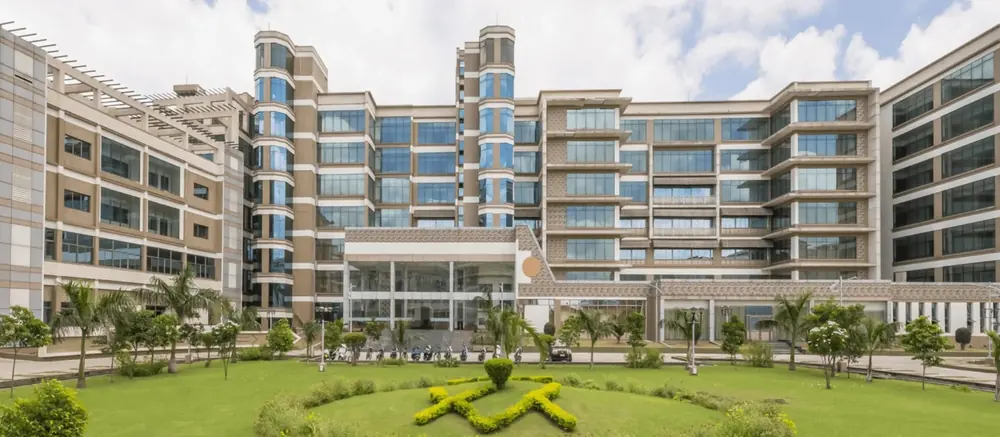
It is run by the Xavier Labour Relations Institute, a society registered with the Government of Jharkhand, and by the Society of Jesus — which is why the director is a Jesuit priest, Fr Sebastian George SJ. The campus is fully residential (XLRI FAQ). The library is the Sir Jehangir Ghandy Library, and XLRI's life-on-campus page says every student is equipped with a laptop. XLRI publishes neither the campus acreage nor an alumni headcount, so any figure you find for either is somebody's estimate. XLRI's own accreditation page lists NBA, AACSB, AMBA and BGA and describes full membership of EFMD; EFMD's EQUIS list includes XLRI.
Official source: XLRI Heritage page (xlri.ac.in/about/heritage); Mandatory Disclosure, XLRI Jamshedpur, prepared September 2025 (AICTE format, 14 pp; linked from xlri.ac.in/about/mandatory-disclosure); XLRI FAQ page (xlri.ac.in/faq); XLRI Life on Campus page; XLRI Accreditations page (xlri.ac.in/newsroom/accreditations); EFMD, EQUIS accredited schools list (efmdglobal.org/accreditations/business-schools/equis/equis-accredited-schools) — read 3 September 2026.
What Students Keep Asking About XLRI — Answered From Official Documents
In one line: there is no XLRI Bangalore, no XLRI BBA or B.Tech, no IIM in Jamshedpur, no one-year MBA and no management quota — five of the most-searched XLRI questions are about things that do not exist.
“XLRI Bangalore MBA fees” — is there an XLRI Bangalore?
No. XLRI has two campuses, Jamshedpur (Jharkhand) and Delhi-NCR (Jhajjar, Haryana), per its own mandatory disclosures. There is no XLRI Bangalore, Mumbai, Kolkata or Hyderabad; a page quoting a fee for one is quoting a campus that does not exist.
“XLRI BBA fees” and “XLRI B.Tech fees”
XLRI runs no BBA, no B.Tech and no undergraduate programme. Its programmes are the PGDMs listed above and the doctoral FPM. If you are searching for a Jamshedpur BBA or B.Tech, it is at another institution.
“IIM Jamshedpur MBA fees”
There is no IIM in Jamshedpur. The IIM in Jharkhand is IIM Ranchi. People who search “IIM Jamshedpur” almost always mean XLRI, whose fee is above: ₹15.25 lakh per annum.
“Does XLRI accept CAT?”
No. CAT appears nowhere on XLRI's admissions page, XAT bulletin or XAT FAQ. For an Indian candidate the route into BM and HRM is XAT 2027; GMAT is accepted only from NRI, PIO, OCI and foreign candidates, and GMAT or GRE for the 18-month PGDM (GM).
“XLRI management quota”
There is none. XLRI's XAT site: “The admissions to XLRI programmes are purely based on merit and does not involve any Management or NRI Quota.” Anyone selling one is selling a seat XLRI does not have.
“XLRI Delhi vs Jamshedpur”
Same PGDM (BM), same ₹30,60,000 programme fee, same XAT cutoffs for BM, one placement report covering both. What differs on paper: Delhi-NCR runs BM and IEV (no HRM), publishes an itemised fee sheet with residence at ₹1,03,500 a year, and has 180 BM seats against Jamshedpur's 240. XLRI publishes no campus-wise split of its placement-report figures; the Delhi-NCR disclosure prints a Delhi-only BM row (2025: minimum ₹18 lakh, maximum ₹52.25 lakh, average ₹28.5 lakh) on a basis it does not state, so no like-for-like “which campus places better” answer exists.
“XLRI executive MBA fees” and “XLRI 1 year MBA fees”
XLRI has no one-year MBA. Its programme for working professionals is the 18-month PGDM (GM) at ₹25.8 lakh with hostel and mess included per XLRI's FAQ but food and personal expenses extra per its admissions-page footnote, for people with at least three years' managerial or supervisory experience by 31 March 2027. Executive-education and online certificate programmes are priced separately and are outside this page.
Official source: Mandatory Disclosure, XLRI Jamshedpur, prepared September 2025 (AICTE format, 14 pp; linked from xlri.ac.in/about/mandatory-disclosure); Mandatory Disclosure, XLRI Delhi-NCR, November 2025 (AICTE format, 16 pp; xlridelhi.ac.in/wp-content/uploads/2026/03/XLRI-Delhi-Mandatory-Disclosure-November-2025.pdf); XLRI admissions overview page (xlri.ac.in/academic-programmes/admission-procedure/overview/xat); xatonline.in (XAT 2027 official site: home, /registration, /faq, /xlri); XLRI FAQ page (xlri.ac.in/faq) — read 3 September 2026.
Need Help With XLRI Jamshedpur Admission? Free Counselling
We read your XAT sectionals against the row that applies to you, tell you honestly whether BM, HRM or GM is the realistic call, and lay out the fee you will actually pay — including the hostel and mess XLRI has not priced. Free, and no agent fees: XLRI has no quota to sell, and neither do we.
WhatsApp for Guidance Call +91 91126 50438Frequently Asked Questions — XLRI Jamshedpur MBA Fees, Cutoff and Admission
Extended FAQs — XLRI Jamshedpur
- Where these figures come from. Every number on this page is taken from an official document — the institute’s own website, prospectus, fee schedule or placement report, a statutory regulator, a counselling body, NIRF, or the exam authority itself. Admissions aggregator websites are not admissible sources for any figure we print — not even as corroboration. Beside each table you will find the document the figure came from and the date we read it.
- Figures change. Check before you pay. Fees, cut-offs, dates and seat numbers are revised by institutes without notice, and a figure that was correct on our capture date can be stale by the time you act on it. Confirm the current number on the official website before any payment or admission decision.
- Spotted an error? Our 48-hour promise. Tell us the page and the section on WhatsApp +91 91126 50438 or at support@findurcollege.com. We re-check the claim against the official document and correct the page within 48 hours. We would rather be corrected by a reader than let a wrong number guide a decision.
- We are independent. FindUrCollege is an independent counselling platform. We are not affiliated with any regulator, and listing an institute does not mean it endorses us or that we endorse it. Counselling is free for students — there are no agent fees.
- Our full sourcing rules, reviewer roster and dates policy are on our editorial policy page.
Related colleges and guides
📌 In one line: FMS Delhi reaches a similar median at roughly a twelfth of the fee, DMS IIT Delhi charges ₹12 lakh with a ₹22.51 lakh median, and ISB publishes no salary at all — the figures below are not on a common basis.
| College | Degree | Latest verified fee marker | Latest verified placement marker |
|---|---|---|---|
| FMS Delhi | MBA (University of Delhi) | ₹60,818 per semester (FMS bulletin 2026-28); no total published | ₹29.59 lakh median, Batch 2024-26 report |
| ISB Hyderabad / Mohali | PGP (not an MBA degree) | ₹40,46,520 all-in for 2027-28, shared accommodation — that is the ₹34,48,000 + GST headline plus ₹5,78,520 GST and the ₹20,000 refundable deposit (ISB's official 2027-28 fee sheet) | ISB publishes no average or median salary |
| DMS, IIT Delhi | MBA (IIT Delhi) | ₹12 lakh tuition, official (about ₹12.4 lakh institute dues, Gen) | ₹22.51 lakh median, Class of 2023-25 report |
| BITSoM Mumbai | MBA | ₹28.55 lakh, Class of 2028 schedule | ₹24 lakh median, audited Class of 2024 |
| SPJIMR Mumbai | PGDM | See our SPJIMR page — it carries its own sourcing | See our SPJIMR page |
| MDI Gurgaon | PGDM | See our MDI page | See our MDI page |
| XIM University (XIMB), Bhubaneswar | MBA | See our XIMB page — the other Jesuit B-school of the east, often confused with XLRI | See our XIMB page |
Every figure above is the one verified on that college's own page, with that page's sourcing and capture date. They are not on a common basis — two are degrees and three are diplomas, the fee markers cover different years and inclusions, and one school publishes no salary at all. Compare each on its own page before setting them side by side.
Nearby and in the east
XIMB, Bhubaneswar · IIM Calcutta — the two B-schools an eastern-India applicant most often shortlists beside XLRI.
Guides that go with this page
- MBA admission guidance — the hub for every management page on this site
- XAT colleges and cutoffs — the other schools that take XAT, with their cutoffs
- GMAT-accepting B-schools in India — for the NRI/foreign and GM routes
- MBA for a lower percentile — if your row of the cutoff table is out of reach
- XLRI vs SPJIMR — the comparison most XLRI BM callers ask for
- MBA vs PGDM — why XLRI's diploma and a university MBA are different documents
Found this useful? Share this page on WhatsApp.
Related Admission Guides
More guides from FindUrCollege: