
COEP Technological University Pune 2026: MHT-CET & JEE Main Cutoff, Fees, Admission & Placements
📌 Related pillar guides: B.Tech Admission Guide · Engineering Colleges India · JEE Main 2026
The complete 2026 guide to COEP Technological University — formerly College of Engineering, Pune (CoEP), now a government unitary public university of the Government of Maharashtra. B.Tech branches and intake, MHT-CET & JEE Main cutoffs, the official 2026-27 government fee structure, hostel charges, the CAP counselling process, and 2024-25 placements — 528 of 630 B.Tech students placed. Admission is 100% merit-based — no management quota, no direct admission.
Evidence note: check the academic year printed beside every figure. COEP publishes a fresh first-year fee sheet each year, and for 2026-27 it revised that sheet on 1 September 2026, so a fee that was correct in August can be wrong now. The CET Cell publishes fresh closing percentiles after each CAP round. Fees here are COEP's revised AY 2026-27 sheet; cutoffs lead with the CAP 2026 Round-I to Round-IV cut-off lists published by the State CET Cell, with the CAP 2025 Round-I closings kept below as last year's reference.
📅 Published 1 June 2026 · ↻ Last updated 11 September 2026 · Admission cycle 2026-27
By Krishna Pandey, Founder & Lead Counsellor — 12+ yrs in B.Tech, MBA & MBBS admissions
✔️ Reviewed for factual accuracy by Tushar Singh, Head of Engineering Admissions · Article Reviewer
COEP Technological University: College Overview at a Glance
📌 In one line: a 172-year-old government engineering institution that became a full public university in 2022 — the identity facts an option form actually needs.
| Field | COEP Technological University |
|---|---|
| Institute Name | COEP Technological University, Pune |
| Also Known As | COEP Tech · COEP Pune · College of Engineering, Pune (CoEP) — its name until the 2022 notification. The NAAC certificate still records it as "COEP Technological University [(Formerly known as College of Engineering (Autonomous), Pune) Shivaji Nagar, Dist. Pune, affiliated to Savitribai Phule Pune University, Maharashtra]". |
| Institute Type | A government college. Specifically, a unitary public university of the Government of Maharashtra, notified 21 June 2022; AICTE classifies it as a State Government University. Autonomous, UGC-recognised. NAAC A+ (CGPA 3.44 on the four-point scale, certificate dated 10 January 2023, valid up to 9 January 2028). NBA Tier-I accreditation for eligible programmes. The State CET Cell records its status as "University Autonomous". If you also see COEP described as affiliated to Savitribai Phule Pune University, that wording comes from the NAAC certificate of January 2023, whose assessment cycle straddled the 2022 change of status — both descriptions are on record, and the university one is the current one. |
| Established | 1854 — opened as the Poona Engineering Class and Mechanical School. AICTE's approval letter records the year of establishment as 1854; the university itself dates from the 21 June 2022 notification. Both dates are true and they answer different questions. |
| Location | Wellesley Road, Shivajinagar, Pune – 411005, Maharashtra |
| Degree Offered | B.Tech (4 years) in nine branches, plus B.Planning (4 years). The nine B.Tech branches and their intake are the ones listed against institute code 16006 on the State CET Cell's own institute summary and in AICTE's 2025-26 approval letter. COEP does not run a B.Arch programme. |
| Exams Accepted | MHT-CET (PCM group) for the 80% state-level seats and JEE Main for the 20% All-India seats. Both are processed through the same Maharashtra CAP counselling. No separate institute entrance test. |
| Institute Code | 16006. This is the number you type — or search for — in the CAP option form on the State CET Cell portal to place COEP among your preferences; each branch then carries a ten-digit course code built on it (for example 1600624210 for Computer Science and Engineering). Getting the code right matters more than it sounds: an option form is processed on codes, not on college names. COEP's AICTE Permanent Id is a different number (1-14626132) and is not used in counselling. |
| Official Website | coeptech.ac.in |
Official sources: State CET Cell institute summary for code 16006 (fe2026.mahacet.org/StaticPages/frmInstituteSummary), read 17 August 2026; AICTE Extension of Approval (Corrigendum) for AY 2025-26, F.No. Western/1-44642169323/2025/EOA/Corrigendum-1 dated 18 June 2025, published on coeptech.ac.in; NAAC Certificate of Accreditation ref. EC(SC)/139/1st Cycle/MHCOGN111055, published on coeptech.ac.in; COEP Technological University, "About University" page, read 17 August 2026.
COEP B.Tech Fee Structure 2026-27 (Official Government Fees)
📌 In one line: an OPEN CAP seat costs ₹1,56,464 in first year for 2026-27 on COEP's revised sheet of 1 September 2026; an All-India JEE seat now costs exactly the same, and several categories pay far less: ₹93,549, ₹30,634 or ₹11,760.
Your first-year bill on an OPEN CAP seat is ₹1,56,464, and several categories pay far less: ₹30,634 or ₹11,760. The figures below are the amounts payable at the time of admission for the first year, taken head by head from COEP's revised AY 2026-27 fee sheet, signed by the Registrar on 1 September 2026. It replaced the sheet of 29 June 2026, so a higher first-year figure you see quoted elsewhere is out of date.
| Admission category (CAP) | First-year amount payable at admission (AY 2026-27) | Reading note |
|---|---|---|
| OPEN | ₹1,56,464 | The headline number: a state MHT-CET seat, open category, no concession claimed. ₹6,000 of it is a refundable caution deposit. |
| All India Quota (JEE Main seat) | ₹1,56,464 | Same as OPEN. The revised sheet gives both the same tuition (₹1,25,830) and the same development fee (₹18,874), so choose between the two routes on your merit number, not on price. |
| EWS / EBC / SEBC with valid certificate | ₹93,549 | Tuition is halved to ₹62,915, not waived. The certificate must be valid. |
| VJ/NT / SBC / OBC with valid Non-Creamy-Layer certificate | ₹30,634 | Tuition is reimbursed by government, so it is not collected at admission — but see the MAHADBT warning below. |
| TFWS (Tuition Fee Waiver Scheme) | ₹30,634 | A small, separately-reserved sub-quota with its own closing percentile — not a discount you can request on an ordinary seat. |
| Girls — OPEN/EWS/SBC/SEBC, family income below ₹8 lakh | ₹30,634 | Tuition is not collected. The ₹5,000 examination fee is, and COEP's revised sheet says it is credited back to your bank account through MahaDBT — see how the girls' waiver works. OBC girls with a valid NCL pay the same ₹30,634 on the OBC row. Requires Maharashtra domicile, a Tahsildar income certificate, and admission through CAP — an institute-level admission does not qualify. |
| SC / ST / PWD / Orphan | ₹11,760 | Only the examination fee (₹5,000) and the one-time heads (₹6,760, including the refundable ₹6,000 deposit) are collected at admission. |
| J&K Migrant / North-East | ₹1,56,464 | Same as OPEN. |
| PMSSS | ₹11,760 | Same treatment as SC/ST/PWD at the admission counter. |
| ACAP (SPOT) round — SC/ST/PWD/Orphan | ₹11,760 | ACAP is the SPOT round COEP runs itself for seats still empty after CAP Round IV. There, VJ/NT/SBC/OBC and EWS/EBC/SEBC candidates with family income above ₹1.5 lakh, and all girls other than SC/ST/PWD/Orphan, pay ₹1,56,464 at admission. The sheet's Note 7 then lets VJ/NT/OBC/SBC/EWS/EBC/SEBC students claim reimbursement on MahaDBT under government norms, so file that application the day you are admitted. |
| ACAP (SPOT) round — VJ/NT/SBC/OBC or EWS/EBC/SEBC with family income above ₹1.5 lakh · all girls other than SC/ST/PWD/Orphan | ₹1,56,464 |
Official source: COEP Technological University, "Fees Structure for Studnets Admitted in AY: 2026-2027 — Programs: B. Tech (First Year B. Tech - All Disciplines & B. Planning)", revised sheet ref. COEP/Revised fee stru./2026-27/UG/780, signed by the Registrar on 1 September 2026 — linked from the university's fee-structure page (coeptech.ac.in/useful-links/university-sections/ac-section/fees-structure-1/) at coeptech.ac.in/wp-content/uploads/2026/09/Revised-Fee-Structure_First-Year_UG-_2026-27.pdf, captured 11 September 2026. It replaces ref. 26-27/564 of 29 June 2026, which the fee page no longer links.
Paid before 1 September 2026? Claim the difference back. If you were admitted in 2026-27 and paid under the June sheet, COEP owes you the excess. Its refund form works out the fees you paid initially minus the revised payable fees and credits the difference by NEFT/RTGS. Attach your payment receipt or demand draft, your admission letter, a cancelled cheque or passbook copy, and your category/NCL certificate if you hold one. The form covers admissions in CAP Rounds I to IV and the spot round. Source: COEP, "Application Form for Refund of Excess Fees Paid (For Students Admitted in Academic Year 2026-27)" (coeptech.ac.in/wp-content/uploads/2026/09/APPLICATION_FORM_FOR_REFUND_OF_EXCESS_FEES_PAID-1-2.pdf), captured 11 September 2026.
What the ₹1,56,464 includes — and what it does not
| Fee head | OPEN amount | Includes | Excludes / reading note |
|---|---|---|---|
| Tuition Fees | ₹1,25,830 | Academic instruction for first year | Not collected at admission for SC/ST/PWD, OBC-NCL, TFWS and eligible girls (reimbursed by government); halved to ₹62,915 for EWS/EBC/SEBC |
| Development Fees | ₹18,874 | Institutional development component | The same ₹18,874 on an All-India JEE seat, which is why the two routes now cost the same |
| Examination Fees | ₹5,000 | First-year examinations | Collected from every category at admission, SC/ST/PWD included; for eligible girls COEP's revised sheet says it is credited back through MahaDBT |
| Miscellaneous Fees | ₹6,760 | Caution money deposit ₹6,000 + alumni association membership ₹750 + disaster relief fund ₹10 | ₹6,000 of this is a refundable deposit, not a cost. Your true first-year outgo on an OPEN seat is ₹1,50,464 once you net it out |
| Total payable at admission | ₹1,56,464 | ||
Do not multiply this by four. ₹1,56,464 is a first-year figure and it is not a quarter of the degree. It carries one-time items (the ₹6,000 refundable deposit, the ₹750 alumni membership) that never repeat, and COEP notifies each later year's fee in a separate circular — there is a distinct second-year B.Tech fee sheet for 2026-27. Nothing on this page is a projection of future fee revisions. If you need a four-year budget, build it from the year-wise circulars as they are published, not from arithmetic.
The MAHADBT trap. Where the fee sheet shows a category paying ₹93,549, ₹30,634 or ₹11,760, the tuition has not been forgiven — it has been reimbursed, and the reimbursement only happens if the student files the scholarship or freeship application on the MAHADBT portal within the stipulated window. COEP's own note is blunt about the consequence: a student who does not apply "will have to pay full fees as applicable to OPEN category", and if the government declines to reimburse, the difference falls due within three weeks. Treat the MAHADBT application as part of the admission, not as paperwork for later.
What the fee was last year — and the international route
Your OPEN total for 2026-27, ₹1,56,464, is exactly what a 2025-26 entrant paid, but the heads are split differently. In 2025-26 it was tuition ₹77,000 + development ₹24,674 + other ₹45,030 + examination ₹3,000 + miscellaneous ₹6,760; for 2026-27 it is tuition ₹1,25,830 + development ₹18,874 + examination ₹5,000 + miscellaneous ₹6,760, with no separate “other fees” head. The All-India seat has come down, from ₹1,79,564 in 2025-26 to ₹1,56,464. The 2025-26 sheet is available here as published (PDF).
Candidates admitted against the supernumerary international categories pay in a mixed currency. For AY 2026-27 COEP's revised international fee sheet of 1 September 2026 sets the first year at US$4,000 + ₹11,760 for CIWGC and SAARC foreign nationals, and US$6,250 + ₹11,760 for non-SAARC foreign nationals and for OCI / PIO / NRI candidates. The ₹6,000 caution deposit inside the ₹11,760 is refundable. That is a real, published, merit-allotted route with a real price — which is precisely why nobody needs to buy anything from an agent to use it.
Official sources: COEP Technological University first-year fee sheet for AY 2025-26 (copy linked above); and the revised "Fees Structure for studnets Admitted in AY: 2026-2027" for CIWGC/FN/OCI/PIO/NRI candidates, ref. COEP/Revised fee stru./2026-27/FN/781, signed by the Registrar on 1 September 2026 (coeptech.ac.in/wp-content/uploads/2026/09/Revised-Fee-structure_FN_2026-27.pdf), captured 11 September 2026.
Scholarships & Freeships
Because COEP admits through the government CAP process, eligible students can claim Maharashtra government scholarships and freeships that materially reduce the net cost:
- The girls' tuition waiver — written as a 100% waiver of tuition and examination fee for EWS / SEBC / OBC girl students, under COEP's circular of 26 July 2024 implementing the state Higher & Technical Education Department resolution of 8 July 2024. On COEP's revised 2026-27 fee sheet the tuition is not collected and the ₹5,000 examination fee is credited back through MahaDBT — see the note directly below. Conditions: Maharashtra domicile certificate, combined parental income not above ₹8.00 lakh on a Tahsildar certificate, admission through the centralised process, and an online MAHADBT application.
- EBC (Economically Backward Class) concession for eligible open-category students.
- TFWS — Tuition Fee Waiver Scheme seats, allotted as their own seat type in CAP with their own closing percentile.
- SC/ST/OBC/VJNT/SBC post-matric scholarships and freeships as per state norms, all routed through MAHADBT.
- Minority and EWS schemes, plus central government scholarships for eligible candidates.
How the girls' waiver works at the counter. If you are an eligible girl, you pay ₹30,634 at admission, against ₹1,56,464 on an OPEN seat. Eligible, on COEP's revised sheet, means OPEN, EWS, SBC or SEBC with family income below ₹8 lakh (OBC girls with a valid NCL pay the same ₹30,634 on the OBC row), plus a Maharashtra domicile certificate. The ₹1,25,830 tuition is not collected. The ₹5,000 examination fee is collected, but the sheet's Note 6 says it is credited back to your own bank account through MahaDBT, so it is refunded to you, not forgiven at the counter, and only if you file the MahaDBT application. That is how the circular of 26 July 2024, which grants a "100% waiver of tuition fee and examination fee", works in practice. You must also have come through CAP: in the ACAP (SPOT) round the same sheet charges girls other than SC/ST/PWD/Orphan the full ₹1,56,464.
COEP Hostel Fees 2026-27
📌 In one line: ₹50,000 a year covers the room for two semesters — the mess is not in that number, and Pune and Pimpri-Chinchwad residents are not eligible at all.
| Item | Amount (AY 2026-27) | Reading note |
|---|---|---|
| Hostel fee — MH-CET and All India (JEE) students | ₹50,000 per year per student | Covers two semesters, odd and even. This is the accommodation charge only. |
| Hostel fee — NRI / FN / Gulf / PIO students | ₹1,27,000 per year per student | COEP states this hostel facility is available only to girl students in these categories. Its notice of 8 September 2026 adds that a separate facility is available for NRI, FN, Gulf, PIO and CIWGC boys. |
| Wakdewadi Hostel — boys, extended facility | ₹90,000 per year per student + ₹10,000 refundable deposit | Listed in COEP's hostel notice of 8 September 2026 as an extended facility for boys, with its own one-time refundable security deposit. |
| Hostel security deposit | ₹10,000, one time | Refundable. A deposit, not a cost. |
| Mess deposit | ₹7,000, one time | Refundable, and paid separately to the mess section at room allotment, not with the hostel fee. |
| Running mess bill | Not listed | The mess is run by the students' hostel committee, so the monthly food bill is set by the committee and is not published by the university. Budget for it separately and ask current students what it actually runs to. |
Official sources: COEP Technological University, Hostel Department, "First Year B. Tech. /B. Planning: Boys & Girls — Hostel Admission Notification A.Y. 2026-27", No. COEP Tech./Hostel/2026/ dated 4 August 2026, published on coeptech.ac.in/hostel/hostel-admissions/, captured 17 August 2026; and the same department's "Schedule & Seat Matrix" notice for first-year B.Tech/B.Planning hostel admission, dated 8 September 2026 (coeptech.ac.in/wp-content/uploads/2026/09/F.Y.-B.-Tech.-B.Plan-Hostel-Admission-BOYSGIRLS-A.Y-2026-27-Schedule-Seat-Matrix.docx), captured 11 September 2026.
The line most families miss: COEP's notification states that students staying in the Pune Municipal Corporation (PMC) and Pimpri Chinchwad Municipal Corporation (PCMC) areas are not eligible for hostel admission. If your home address is inside those limits, plan on commuting or on private accommodation from day one — the hostel is not an option you can fall back on later.
Three more things worth knowing before you count on a hostel seat. Allotment is branch-wise and on merit — MH-CET merit number for state candidates, All-India merit number for JEE candidates — so a hostel seat is not automatic with an admission. Once you are allotted a hostel seat, a later branch change will not change that allotment. And publication of a hostel process does not guarantee a room. For 2026-27, COEP's notice of 8 September 2026 distributes 287 first-year hostel seats for boys and 257 for girls (B.Tech and B.Planning together), branch by branch and category by category, with a further 25 for boys and 19 for girls under the GoI and J&K categories, and 20 for NRI/FN/PIO/Gulf girls. Applications closed on 8 September 2026. The provisional merit list came out on 10 September; the final merit list is due on 13 September at 2:00 PM, hostel fees are payable from 13 September to 14 September up to 2:30 PM, rooms are allotted on 14 September at 5:30 PM, and you report on 15 or 16 September 2026.
COEP Placements 2024-25 (Official Report)
📌 In one line: 528 of 630 B.Tech students placed — 84%, the best of the last three years — but the branch you get decides almost everything.
What you can expect depends heavily on branch: 91.82% of Computer Science students were placed in 2024-25, against 61.54% in Civil. The figures below come from two documents COEP published itself: its Placement Season 2024-2025 report and the Training & Placement Cell's B. Tech Placement Statistics sheet.
Which number is the honest one: the 84% placed figure, because it has a denominator — 528 students placed out of 630 enrolled. The "560+ offers" headline on COEP's placement poster counts offers, and strong candidates collect more than one, so it is always larger than the number of students who got a job. Average salary is a mean, not a median, and a single ₹52.57 LPA offer pulls a 630-student mean upward. COEP does publish a median, just not on its placement poster: in its NIRF 2025 submission, the B.Tech batch that graduated in 2023-24 had a median salary of ₹10.50 lakh a year for placed graduates, with 587 of 741 placed and 124 more going on to higher studies. That median is the honest middle-student figure, and it sits below the ₹12.00 LPA average COEP's T&P sheet gives for 2023-24, as a median does when a few large offers pull the mean up. NIRF's 587 of 741 counts that batch's on-time graduates; COEP's 528 of 630 counts students enrolled for placement in 2024-25, so do not set the two side by side. (Source: NIRF, Data Submitted by Institution for India Rankings 2025, COEP Technological University [IR-E-U-1257], nirfindia.org/nirfpdfcdn/2025/pdf/Engineering/IR-E-U-1257.pdf, captured 11 September 2026.)
Why two average figures appear. COEP's placement poster prints "Average Package 12 LPA" for 2024-25. COEP's own Training & Placement Cell statistics sheet prints "AVERAGE SALARY 2024-25: 11.62 LPA" — and shows 12.00 LPA as the 2023-24 figure. Both documents are COEP's. They are not interchangeable totals, and we print both rather than quietly choosing the higher one. Where a decision turns on it, use 11.62 LPA: it comes from the sheet that also carries the enrolled and placed counts.
Three-year placement scenario
| Details | 2022-23 | 2023-24 | 2024-25 |
|---|---|---|---|
| Total students enrolled | 788 | 695 | 630 |
| Total students placed | 590 (74.87%) | 549 (79%) | 528 (84%) |
| Companies visited | 214 | 241 | 245 |
| Highest salary | ₹50.50 LPA | ₹87.00 LPA | ₹52.57 LPA |
| Average salary | ₹11.20 LPA | ₹12.00 LPA | ₹11.62 LPA |
Official source: COEP Technological University Training & Placement Cell, "B. Tech Placement Statistics" (coeptech.ac.in/wp-content/uploads/2025/08/Placement-Statistics-2024-25.pdf), captured 17 August 2026.
Read the highest-package line carefully. ₹52.57 LPA is a good number, but COEP's own sheet shows the 2023-24 highest was ₹87.00 LPA — so the peak fell, it did not rise. A highest package is one student's outcome in one year and it swings wildly; it tells you almost nothing about your own likely offer. The placement percentage and the branch-wise averages do.
Branch-wise averages and placement rates
This is where the real decision sits. COEP's branch-wise 2024-25 salary table is headed "(On going)" on the Training & Placement Cell sheet, so treat these as provisional — that season had not closed when the sheet was published.
| Branch | Average CTC 2024-25 (provisional) | Highest CTC 2024-25 | Students placed 2024-25 | Reading note |
|---|---|---|---|---|
| Computer Science & Engineering | ₹17.31 LPA | ₹52.57 LPA (Nutanix) | 91.82% | Highest average and near-highest placement rate — the branch everyone is competing for. |
| Electronics & Telecommunication (E&TC) | ₹12.65 LPA | ₹52.57 LPA (Nutanix) | 82.19% | Second-best average, but its placement rate slipped from 90.00% in 2023-24. |
| Instrumentation & Control | ₹11.63 LPA | ₹52.57 LPA (Nutanix) | 90.00% | A small branch (60 seats) that quietly out-earns Electrical and Mechanical. |
| Electrical Engineering | ₹10.28 LPA | ₹52.57 LPA (Nutanix) | 100% | Every registered student placed in 2024-25, up from 95.77% the year before. |
| Manufacturing Science & Engineering | ₹8.81 LPA | ₹21.10 LPA (FINIQ) | 85.19% | Recovered sharply from 73.21% in 2023-24. |
| Mechanical Engineering | ₹8.34 LPA | ₹21.10 LPA (FINIQ) | 84.68% | Steady, but the average is less than half CSE's. |
| Civil Engineering | ₹7.86 LPA | ₹19.18 LPA (Oracle) | 61.54% | Nearly four in ten registered students were not placed. This is still the best Civil figure in five years — it was 37.50% in 2023-24. |
| Metallurgy & Materials Technology | ₹5.47 LPA | ₹19.18 LPA (Oracle) | 67.31% | Lowest B.Tech average on the sheet, and the placement rate fell from 69.35%. |
| B.Planning (separate programme) | ₹5.80 LPA | ₹13.88 LPA (Future First) | 33.33% | Only one in three placed. If you are considering B.Planning at COEP for the placement outcome, this is the number to weigh — it has not been above 39% in five years. |
Official source: COEP Technological University Training & Placement Cell, "B. Tech Placement 2024-25 (On going)" and "B. Tech Placement Statistics for last 5 Years" tables on the same sheet, captured 17 August 2026.
The "Highest CTC" column is not what it looks like. The same ₹52.57 LPA Nutanix offer is printed against Computer Science, E&TC, Electrical and Instrumentation & Control, and the same ₹19.18 LPA Oracle offer against Civil and Metallurgy. These are the institute-wide top offers reachable by those branch groups, not nine separate branch ceilings. Do not read the Civil row as "Civil students routinely get ₹19.18 LPA".
Alongside the placement season, 2024-25 recorded 375+ internship offers with a highest stipend of ₹2 lakh per month and recruitment across 20+ sectors. The named third-year internship selections were D.E. Shaw & Co (2 selections at ₹2 lakh/month), Arcesium (2 at ₹1.25 lakh/month), Wells Fargo (10 at ₹90,000/month), Hilti (4 at ₹80,000/month) and Citi (13 at ₹75,000/month).
Recruiters named on COEP's own placement report span global tech, quant and banking majors — NVIDIA, Texas Instruments, Goldman Sachs, J.P. Morgan, D.E. Shaw & Co, Arcesium, Mastercard, Citi, Wells Fargo, Deutsche Bank, UBS, Barclays and BNY Mellon — alongside core-engineering and industry names such as Tata Motors, Caterpillar, Schneider Electric, Emerson, Hyundai, thyssenkrupp, Atlas Copco, Reliance Industries, Thermax, IBM, Ericsson and Deloitte.
COEP MHT-CET & JEE Cutoffs (Official CAP 2026 and 2025 Closing Percentiles)
How to read this: every figure below is a closing (lowest allotted) score in the round named above it, read from the State CET Cell's own list for institute code 16006. The CET Cell prints two numbers against each seat: the large one is the Maharashtra state general merit number and the bracketed one is the merit percentile. They are not interchangeable, and quoting the merit number as though it were a percentile is the commonest error in the cutoff tables you will find elsewhere. In the CET Cell's own legend, GOPENS means General–Open–State Level; that "S" is state level, not "other than home university". Cutoffs change every year, and by category, round and seat type. Do not assume a later round closes lower: at COEP in 2026 it often closed higher. Always confirm against the official list on cetcell.mahacet.org.
MHT-CET CAP 2026 status: CAP 2026 is over. The State CET Cell has published its cut-off lists for all four rounds of 2026-27, CAP Round I to Round IV, so the COEP cutoff for MHT-CET 2026 below is the official closing figure for each round rather than a projection. Round IV reporting closed on 7 September 2026 and the Round IV allotment was final. COEP is filling its remaining empty CAP seats in its own ACAP (SPOT) round, 10 to 14 September 2026. The CET Cell's last date for every engineering admission in Maharashtra is 14 September 2026, 5:00 PM (circular 2187 of 7 September 2026), and a seat cancelled by 13 September 2026 gets its fee back in full.
COEP Cutoff 2026 (Official MHT-CET CAP Round I to Round IV Closing Figures)
📌 In one line: on the CET Cell's 2026 Round-I list the Open (GOPENS) seat closed at 99.98 percentile — merit no. 150 — for Computer Science and at 98.85 (merit no. 4,977) for Metallurgy & Materials; later rounds often closed higher, not lower, and by Rounds III and IV Computer Science had no Open state seat left to allot.
| B.Tech Branch | CAP Round I 2026 merit no. (percentile) | CAP Round II 2026 merit no. (percentile) | CAP Round III 2026 merit no. (percentile) | CAP Round IV 2026 merit no. (percentile) | Reading note |
|---|---|---|---|---|---|
| Computer Science & Engineering | 150 (99.98) | 170 (99.97) | no Open seat left | no Open seat left | Rounds I and II were the only rounds with an Open state seat in this branch. If Computer Science is your first choice, do not hold out for a later round. |
| Artificial Intelligence & Machine Learning | 365 (99.92) | 377 (99.92) | no Open seat left | 633 (99.86) | No Open seat in Round III; the Round IV list shows one again, closing at merit no. 633. Plan AI & ML as a CSE-level choice, not a fallback. |
| Electronics & Telecommunication (E&TC) | 681 (99.84) | 696 (99.84) | 489 (99.89) | 731 (99.83) | Round III closed 192 merit places higher than Round I. E&TC is the third wall, not a soft landing. |
| Electrical Engineering | 1,511 (99.65) | 1,562 (99.63) | 1,456 (99.66) | 1,749 (99.59) | All four rounds closed within 293 merit places of each other — no materially easier round. |
| Instrumentation & Control | 1,743 (99.59) | 1,777 (99.59) | 1,130 (99.74) | 1,801 (99.59) | Round III closed 613 merit places higher than Round I. |
| Mechanical Engineering | 1,781 (99.59) | 1,911 (99.55) | 1,504 (99.65) | 2,054 (99.53) | Moved both ways: Round III closed higher than Round I, Round IV lower. |
| Manufacturing Science & Engineering | 2,750 (99.37) | 2,390 (99.45) | 2,385 (99.45) | 2,659 (99.39) | Every later round closed higher than Round I. Waiting cost merit here; it did not buy it. |
| Civil Engineering | 4,148 (99.04) | 2,326 (99.46) | 2,249 (99.48) | 2,660 (99.39) | The biggest reversal on the list: every later round closed at least 1,488 merit places higher than Round I. A Round-I Civil seat was the easiest Civil seat of the year on merit. |
| Metallurgy & Materials Technology | 4,977 (98.85) | 3,745 (99.14) | 5,235 (98.79) | 2,983 (99.31) | Swung both ways: 4,977, 3,745, 5,235, then 2,983. The "later rounds are easier" rule fails on COEP's smaller branches. |
Official source: State Common Entrance Test Cell, Government of Maharashtra, "Cut Off List for Maharashtra & Minority Seats of CAP Round I" and the matching lists for Round II, Round III and Round IV, First Year Four Year Degree Courses in Engineering and Technology 2026-27, rows for institute code 16006 (status "University Autonomous") — all linked from the CET Cell's B.E./B.Tech portal home page (fe2026.mahacet.org/StaticPages/HomePage) at cappublicdocs2026.blob.core.windows.net/documents/: 2026ENGG_CAP1_MH_CutOff_V1.pdf and 2026ENGG_CAP2_MH_CutOff.pdf (captured 17 August 2026), 2026ENGG_CAP3_MH_CutOff.pdf (published 24 August 2026, captured 5 September 2026) and 2026ENGG_CAP4_MH_CutOff.pdf (published 3 September 2026, read 11 September 2026). “No Open seat left” means the list prints no Open (GOPENS) closing for that branch in that round. Percentiles are shown here to two decimals; the official list prints them to seven.
A later round is not automatically an easier round. That is the assumption almost every candidate brings to the option form, and COEP's own 2026 lists break it again and again: Civil closed at merit no. 4,148 in Round I but 2,326 in Round II, Metallurgy at 4,977 then 3,745, Manufacturing at 2,750 then 2,390; E&TC closed at 681 in Round I and 489 in Round III, and by Rounds III and IV Computer Science had no Open state seat left at all. Fewer seats are left in a later round and the candidates still in the pool are the ones who turned something down, so the last seat can move up the merit list rather than down. Fill Round I as though it is your only round.
Category-wise closing percentiles, CAP Round-I 2026
| B.Tech Branch | Open (GOPENS) | Ladies Open (LOPENS) | OBC (GOBCS) | SC (GSCS) | ST (GSTS) | TFWS |
|---|---|---|---|---|---|---|
| Computer Science & Engineering | 99.98 | 99.97 | 99.90 | 99.15 | 96.42 | 99.95 |
| Artificial Intelligence & Machine Learning | 99.92 | 99.94 | 99.85 | 98.92 | 95.83 | 99.90 |
| Electronics & Telecommunication (E&TC) | 99.84 | 99.80 | 99.76 | 98.66 | 94.70 | 99.81 |
| Electrical Engineering | 99.65 | 99.52 | 99.54 | 97.82 | 92.41 | 99.62 |
| Instrumentation & Control | 99.59 | 99.53 | 99.45 | 97.59 | 88.72 | 99.45 |
| Mechanical Engineering | 99.59 | 99.30 | 99.40 | 97.13 | 92.21 | 99.50 |
| Manufacturing Science & Engineering | 99.37 | 98.62 | 99.24 | 96.35 | 84.21 | 99.10 |
| Civil Engineering | 99.04 | 98.62 | 98.67 | 96.92 | 93.16 | 99.14 |
| Metallurgy & Materials Technology | 98.85 | 98.20 | 98.63 | 95.89 | 85.09 | 98.76 |
Official source: the same State CET Cell CAP Round-I 2026-27 cut-off list for institute code 16006 — cappublicdocs2026.blob.core.windows.net/documents/2026ENGG_CAP1_MH_CutOff_V1.pdf · captured 17 August 2026. This table carries percentiles only — the state general merit number the CET Cell prints beside each one is in the Open table above. Ladies Open is a separate pool inside the Open category, so it can close either side of the general Open figure: in 2026 it closed above Open on AI & ML and below it on the other eight branches. EWS closings are listed branch by branch in the CET Cell's own list; check the branch you are applying for there rather than reading one branch's EWS figure across the others.
COEP Cutoff 2025 (MHT-CET CAP Round-I Closing Percentiles — last year, kept for comparison)
📌 In one line: in CAP Round-I 2025, Open closings ran from 99.90 for CSE down to 98.41 for Metallurgy & Materials — the spread across branches is wider than most candidates assume.
| B.Tech Branch | Open (GOPENS) | Ladies Open (LOPENS) | OBC (GOBCS) | EWS | SC (GSCS) | TFWS |
|---|---|---|---|---|---|---|
| Computer Science & Engineering | 99.90 | 99.90 | 99.80 | 99.69 | 98.92 | 99.90 |
| Artificial Intelligence & Machine Learning | 99.86 | 99.77 | 99.75 | 99.57 | 98.62 | 99.82 |
| Electronics & Telecommunication (E&TC) | 99.73 | 99.61 | 99.59 | 99.41 | 98.36 | 99.66 |
| Electrical Engineering | 99.51 | 99.30 | 99.35 | 98.83 | 97.42 | 99.39 |
| Mechanical Engineering | 99.44 | 99.09 | 99.15 | 98.60 | 97.18 | 99.17 |
| Instrumentation & Control | 99.41 | 99.11 | 99.24 | 98.77 | 97.09 | 99.32 |
| Manufacturing Science & Engineering | 99.06 | 98.49 | 98.73 | 98.02 | 95.80 | 98.95 |
| Civil Engineering | 98.62 | 98.06 | 98.23 | 96.96 | 95.62 | 98.58 |
| Metallurgy & Materials Technology | 98.41 | 98.11 | 98.02 | 95.85 | 94.63 | 98.13 |
Official source: Maharashtra State CET Cell, "Provisional Allotment List of CAP Round-I for the Admission to the First Year of Four Year Degree Courses in Engineering and Technology, 2025-26" for institute 16006, published at fe2025.mahacet.org/CAP-I/CAPR-I_16006.pdf, captured 17 August 2026. Percentiles are the lowest allotted score in each seat type, rounded to two decimals from the four-decimal figures in the list.
Do not read the TFWS column as an Open cutoff. TFWS is the Tuition Fee Waiver Scheme — a small, separately-reserved seat type for economically weaker families, with its own eligibility and its own closing percentile. It is the single most-confused column on any Maharashtra cutoff table. In CAP Round-I 2025 it sat well below the Open figure on several branches — Mechanical closed at 99.44 Open but 99.17 TFWS, Metallurgy at 98.41 Open but 98.13 TFWS — and in the 2026 Round-I list it is below Open on eight of the nine branches and above it on Civil (99.14 TFWS against 99.04 Open). A candidate who is not TFWS-eligible cannot use those numbers to set a target, in either direction.
JEE Main (All-India) closings, CAP 2026 and CAP 2025 Round I
The 20% All-India seats are filled on JEE Main percentile through the same CAP framework, and the CET Cell publishes them under a separate "All India Seats" heading with a JEE (Main) Score column — and in CAP Round I 2026 every one of COEP's All-India seats went to a JEE Main candidate. The 2026 column prints the All-India merit number with the JEE Main score in brackets, as the CET Cell does; the 2025 column is last year's closing percentile, kept as history. These are JEE percentiles and are not comparable with the MHT-CET percentiles above:
| B.Tech Branch | CAP Round I 2026 All-India merit no. (JEE Main score) | CAP Round I 2025 JEE Main closing percentile | All-India seats |
|---|---|---|---|
| Computer Science & Engineering | 212 (99.48) | 99.45 | 60 |
| Artificial Intelligence & Machine Learning | 289 (99.37) | 99.34 | 15 |
| Electronics & Telecommunication (E&TC) | 503 (99.10) | 99.12 | 30 |
| Electrical Engineering | 1,092 (98.50) | 98.41 | 30 |
| Instrumentation & Control | 1,269 (98.33) | 98.19 | 12 |
| Mechanical Engineering | 1,497 (98.14) | 98.06 | 30 |
| Manufacturing Science & Engineering | 2,348 (97.43) | 97.17 | 15 |
| Civil Engineering | 3,154 (96.75) | 96.46 | 30 |
| Metallurgy & Materials Technology | 3,499 (96.46) | 96.35 | 15 |
Official sources: 2026 — State CET Cell, "Cut Off List for All India Seats of CAP Round - I", Engineering and Technology 2026-27, p.141, COEP rows, merit exam "JEE" on every row (cappublicdocs2026.blob.core.windows.net/documents/2026ENGG_CAP1_AI_CutOff.pdf), captured 11 September 2026. 2025 — the same CET Cell CAP Round-I 2025 allotment list for institute 16006, "All India Seats Allotted to All India Candidature Candidates with JEE(Main) Score" section. The allotted-row count matches the sanctioned All-India seats for every branch, which is how we know no seat was missed.
Should you try the JEE route? Check your All-India merit number against the All-India closings above, and your state merit number against the state closings. Never set a JEE percentile against an MHT-CET percentile: they rank different candidate pools, so a lower JEE figure is not an easier seat. If you hold both scores, fill both kinds of choice. The fee is now the same either way, ₹1,56,464 in first year. It is a genuine choice, not a loophole — you still have to be on merit.
Why 2025 cutoffs are not comparable with 2024. AICTE approved a large intake increase at COEP for 2025-26: Computer Science went from 150 seats to 300, Civil from 75 to 150, Electrical from 75 to 150 and Instrumentation & Control from 38 to 60. When a branch doubles in size, its closing percentile normally falls — so a lower 2025 number does not mean the college got less competitive in any meaningful sense. Compare like with like, or compare ranks rather than percentiles.
Looking for the COEP cutoff for MHT-CET OBC, SC, ST or TFWS seats? Those closings are in the 2026 category table above, taken from the CET Cell's own list. ST (GSTS) closings run much lower and are volatile because so few seats are involved — in CAP Round-I 2026 they were 96.42 for Computer Science, 95.83 for AI & ML, 94.70 for E&TC and 85.09 for Metallurgy & Materials, against 95.83, 95.45, 94.43 and 81.04 in CAP Round-I 2025. Metallurgy & Materials alone moved more than four percentile points between those two years, which is why one remembered number is worth nothing here: check your own category's column in the official closing list for the round you are in.
Want to benchmark these closing percentiles? Compare the PICT vs COEP Pune cutoff head-to-head, review the MHT-CET CAP cutoff & counselling guide for round-wise trends, or see the VIT Pune cutoff for another top Pune option.
COEP B.Tech Branches & Seat Intake 2026-27
📌 In one line: for 2026-27 you are competing for 1,185 B.Tech seats in nine branches, and every one is a CAP seat: 948 for Maharashtra-State candidates and 237 All-India, with no institute-level seats. The branch intake is the same as in 2025-26.
Each branch's seats are split 80:20 between MHT-CET and JEE Main and then allotted through CAP. The 2026-27 intake below is the one the State CET Cell prints against institute code 16006 in its CAP Round-I seat matrix of 27 July 2026 and again in its ACAP vacancy list of 8 September 2026; it is the same as AICTE's approved intake for 2025-26. The 2024-25 column is included because the increase is large enough to change how you read last year's cutoffs.
| B.Tech Branch | Intake 2024-25 | Intake 2026-27 (same in 2025-26) | MHT-CET (80%) | JEE Main (20%) | Institute-level seats |
|---|---|---|---|---|---|
| Computer Science & Engineering | 150 | 300 | 240 | 60 | 0 |
| Electronics & Telecommunication (E&TC) | 150 | 150 | 120 | 30 | 0 |
| Electrical Engineering | 75 | 150 | 120 | 30 | 0 |
| Civil Engineering | 75 | 150 | 120 | 30 | 0 |
| Mechanical Engineering | 150 | 150 | 120 | 30 | 0 |
| Instrumentation & Control | 38 | 60 | 48 | 12 | 0 |
| Manufacturing Science & Engineering | 75 | 75 | 60 | 15 | 0 |
| Metallurgy & Materials Technology | 75 | 75 | 60 | 15 | 0 |
| Artificial Intelligence & Machine Learning | 75 | 75 | 60 | 15 | 0 |
| Total B.Tech | 863 | 1,185 | 948 | 237 | 0 |
| B.Planning (separate 4-year programme) — intake raised from 60 to 75 for 2025-26 | |||||
Official sources: State CET Cell, "Provisional Seat Matrix for CAP Round I", First Year Engineering and Technology, A.Y. 2026-27, published 27 July 2026 (cappublicdocs2026.blob.core.windows.net/documents/2026_fe_seatmatrix_V1.pdf), captured 10 September 2026, and "Provisional Vacant Seats after CAP IV (ACAP)", published 8 September 2026 (cappublicdocs2026.blob.core.windows.net/documents/FE2026_Vacancy_For_ACAP.pdf), captured 11 September 2026, which print the 2026-27 intake; AICTE Extension of Approval (Corrigendum) for AY 2025-26, F.No. Western/1-44642169323/2025/EOA/Corrigendum-1 dated 18 June 2025, published on coeptech.ac.in; and the State CET Cell's seat matrix and CAP Round-I 2025 allotment list for institute 16006 (which prints "Institute Seats: 0" and "Minority Seats: 0" with CAP Seats equal to sanctioned intake against every branch), both captured 17 August 2026.
EWS and TFWS seats are not a slice of the 1,185 — they sit on top of it. In the CET Cell's own CAP lists for institute 16006, EWS and the Tuition Fee Waiver Scheme are published as separate blocks, with their own sanctioned numbers and their own closing percentiles, over and above the branch intake in the table above. That is why the cutoff tables carry EWS and TFWS columns with no matching row here. Read them as additional seats you may be eligible for, not as seats taken out of the Open pool.
Publication of an intake does not guarantee allotment. These are sanctioned seats, not seats available to you; how many are within reach depends on your seat type, your category and which CAP round you are in.
Searching for the COEP B.Planning cutoff or a COEP architecture cutoff? COEP does not offer a B.Arch programme — AICTE's approval letter lists only "Under Graduate — Planning" alongside the engineering branches. Its planning-side offering is B.Planning, which has its own admission process and a separate closing-percentile list published by the CET Cell. Before you choose it, read the B.Planning placement rate in the table above.
Why "Government" Matters: No Management Quota, No Direct Admission
Because COEP is a government unitary public university, every B.Tech seat is a CAP seat, allotted through the centralised CAP (Centralised Admission Process) run by the Maharashtra CET Cell, and seats still empty after CAP Round IV are filled in COEP's own merit-based ACAP (SPOT) round. Unlike private and deemed universities, COEP does not have a management quota, an institutional quota, or any "direct admission" channel for its sanctioned seats. The only currency for admission is your MHT-CET or JEE Main percentile, combined with category and seat-type reservations applied during CAP.
This is not our opinion — it is visible in the CET Cell's own document. On the CAP Round-I 2025 allotment list for institute 16006, every branch prints "Institute Seats: 0" and "Minority Seats: 0", with CAP Seats equal to the full sanctioned intake. At most private colleges those same lines carry a real number, which is the institute-level quota that agents trade in. At COEP the number is zero.
- 80% of seats — MHT-CET: allotted to Maharashtra state candidates on MHT-CET merit through CAP.
- 20% of seats — JEE Main: an All-India quota filled on JEE Main merit through the same CAP framework.
- Supernumerary seats: COEP additionally admits CIWGC, OCI/PIO, Foreign National and NRI candidates on seats that sit over and above the sanctioned intake — 5% for CIWGC and 20% for the non-CIWGC group, split 10% OCI/PIO, 5% Foreign National and 5% NRI. These are run through COEP's own International Admissions process on an inter-se merit list, with a published fee (US$6,250 + ₹11,760 in first year for OCI/PIO/NRI in 2026-27, on COEP's revised sheet of 1 September 2026), and they are not a paid direct-admission route. If you genuinely hold NRI or OCI status, this is a legitimate door — and you apply for it yourself.
If someone offers you a COEP seat for money, the offer is not real. There is no seat category at COEP that can be transferred for a fee. The one nuance worth knowing: COEP has no institute-level or management seat, but CAP seats still empty after Round IV do not vanish. COEP fills them itself, in its own University Level ACAP (SPOT) round, on inter-se merit. For 2026-27 the CET Cell's vacancy list of 8 September 2026 showed 137 empty COEP seats across all nine branches, including 21 in Computer Science (4 Maharashtra-State, 17 All-India). COEP's notification of 8 September 2026 runs the rounds from 10 to 14 September 2026; seats are allotted in person in order of merit number, and the fee is paid by demand draft. Registration closed on 8 September 2026 at 1.00 PM, and COEP calls for allotment only candidates who appear in the merit list it published, so if you did not register, this round is closed to you for 2026-27. The CET Cell's final cut-off for every admission is 14 September 2026, 5:00 PM (circular 2187 of 7 September 2026). The legitimate paths are MHT-CET → CAP, JEE Main → CAP, COEP's own merit-based ACAP (SPOT) round for seats left after CAP, or a genuine supernumerary category you already qualify for. FindUrCollege's role here is strictly eligibility, document verification and CAP option-form strategy.
How to Get Admission to COEP: MHT-CET / JEE → CAP, Step by Step
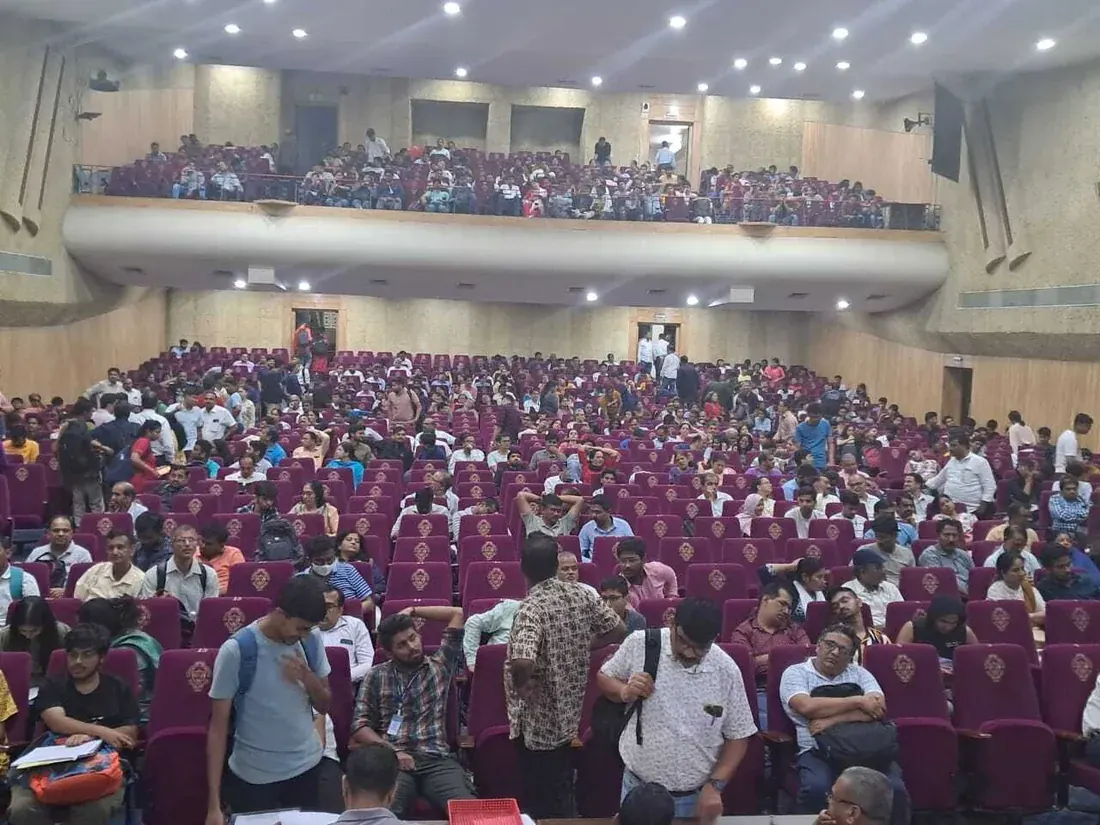
- Appear for the entrance exam: take MHT-CET (PCM group) for the 80% state seats, or JEE Main for the 20% All-India seats. To be eligible you need Class 12 with Physics and Mathematics plus one more subject from the CET Cell's list (Chemistry, Biotechnology, Biology, Computer Science, IT, Electronics and others), and at least 45% across those three subjects, or 40% if you are a Maharashtra reserved-category, EWS or PwD candidate. For a Maharashtra-State seat you also need a non-zero score in PCM MHT-CET 2026.
- Register for Maharashtra CAP: after results, register on the CET Cell portal (cetcell.mahacet.org), fill the application, upload documents and complete e-scrutiny/verification. Claim your category, domicile and any reservation (TFWS/EWS/EBC etc.) at this stage — you cannot add a claim later.
- Fill the option form: list COEP branches by course code in your true order of preference, along with backup colleges. Smart option-form ordering is where most good seats are won or lost.
- Seat allotment across CAP rounds: seats are allotted on merit and preference across the four CAP rounds, and seats still vacant after Round IV go to COEP's own ACAP (SPOT) round. Remember the fee difference: in ACAP, an OBC/VJ/NT/SBC or EWS/EBC/SEBC candidate with family income above ₹1.5 lakh pays ₹1,56,464 at admission and then claims reimbursement on MahaDBT under government norms.
- Accept & report: accept the allotted seat within the published window, pay the fee, and report to COEP for document verification and admission confirmation. If you are claiming a freeship or scholarship, file the MAHADBT application in the same period.
- Apply for the hostel separately: a hostel seat is a separate merit-based application with its own window, and it is not available to PMC/PCMC residents.
There is no shortcut around this process for COEP. What we can do — for free — is help you read your percentile correctly, order your CAP option form for the best realistic branch, prepare your documents, and line up strong backup colleges so you are never left without a seat.
COEP vs PICT vs VIT Pune (2026)
Merit students aiming for Pune often weigh COEP against PICT and VIT Pune. All three admit through MHT-CET CAP on merit, but only COEP has no institute-level quota at all, and its concession categories pay far less.
📌 In one line: side-by-side on the four things that actually differ — type, cutoff, what you actually pay, and whether a management seat exists at all.
| Parameter | COEP Tech | PICT Pune | VIT Pune |
|---|---|---|---|
| Type | Government unitary public university | Private, unaided & autonomous (SPPU) | Private, unaided & autonomous (SPPU, run by BRACT) |
| B.Tech admission | MHT-CET 80% + JEE 20% via CAP | MHT-CET via CAP | MHT-CET via CAP |
| Institute-level (management) seats | None | Yes | Yes |
| Computer-branch MHT-CET cutoff, Open (GOPENS), CAP Round-I 2026 | 99.98 %ile — merit no. 150 (Computer Science & Engineering) | 99.79 %ile — merit no. 929 (Computer Engineering) | 99.09 %ile — merit no. 3,967 (Computer Engineering) |
| Fee on an Open / CAP seat, 2026-27 | ₹1,56,464, the first-year total payable at admission (revised 1 September 2026) — of which tuition ₹1,25,830 + development ₹18,874 = ₹1,44,704 on the fee-side heads the other two quote | ₹1,23,000 a year — tuition ₹1,06,956 + development ₹16,044, on the FRA-approved structure | ₹2.12 lakh a year — the CAP (merit) rate, flat across branches; its institute-level CSE seat is ₹6.24 lakh a year |
| Highest package | ₹52.57 LPA (2024-25; the 2023-24 peak was ₹87.00 LPA) | See the PICT page | See the VIT Pune page |
| Detailed guide | This page | PICT Pune → | VIT Pune → |
All three cutoffs come out of one document, so they are genuinely like-for-like: the State CET Cell's "Cut Off List for Maharashtra & Minority Seats of CAP Round I" for 2026-27 — COEP institute code 16006, PICT 06271, VIT Pune 06273 — cappublicdocs2026.blob.core.windows.net/documents/2026ENGG_CAP1_MH_CutOff_V1.pdf · captured 17 August 2026. The fee figures are not like-for-like and must not be subtracted from one another: COEP's ₹1,56,464 is a first-year total payable at the admission counter (tuition, development, examination, one-time heads and a refundable deposit), while PICT's ₹1,23,000 and VIT Pune's ₹2.12 lakh are annual fee-side rates before examination, university and deposit charges — each sourced on our PICT Pune and VIT Pune pages. Compare like with like and COEP's tuition plus development, ₹1,44,704, is above PICT's FRA-approved ₹1,23,000 and below VIT Pune's FRA-approved ₹2,06,000 (tuition ₹1,79,130 + development ₹26,870, Fees Regulating Authority fee-approval report for AY 2026-27, ay26-27.mahafraportal.org), so on those heads COEP is not the cheapest of the three. Where COEP does cost you far less is the concessions: OBC-NCL, TFWS and eligible girls pay ₹30,634, and SC/ST/PWD ₹11,760. Branch names differ between colleges — COEP's is "Computer Science & Engineering", PICT's and VIT's are "Computer Engineering" — so compare the branch, not just the label.
If you are a merit student on a budget, COEP's case rests on three things you can check: no management seat to compete against, concession fees as low as ₹30,634 or ₹11,760, and 84% of the B.Tech students it enrolled for placement in 2024-25 placed. The honest caveat is the branch spread — COEP's Civil and Metallurgy placement rates are well below its CSE rate, so "COEP" alone is not the decision; "COEP, in which branch" is. For a direct head-to-head, see our PICT vs COEP Pune 2026 comparison.
Heritage, Campus & Student Life at COEP
COEP Tech's precursor — the Poona Engineering Class and Mechanical School — opened in 1854, making COEP among the oldest engineering institutions in the country, with over 170 years of academic heritage. For generations it was known simply as the College of Engineering, Pune (CoEP), an autonomous government institute whose graduates have shaped Indian industry, infrastructure and public service.
On 21 June 2022, the Government of Maharashtra elevated CoEP to a full unitary public university through an official notification, creating COEP Technological University. This government status is the single most important thing for an aspirant to understand: it shapes how you get in, what you pay, and what nobody can sell you.
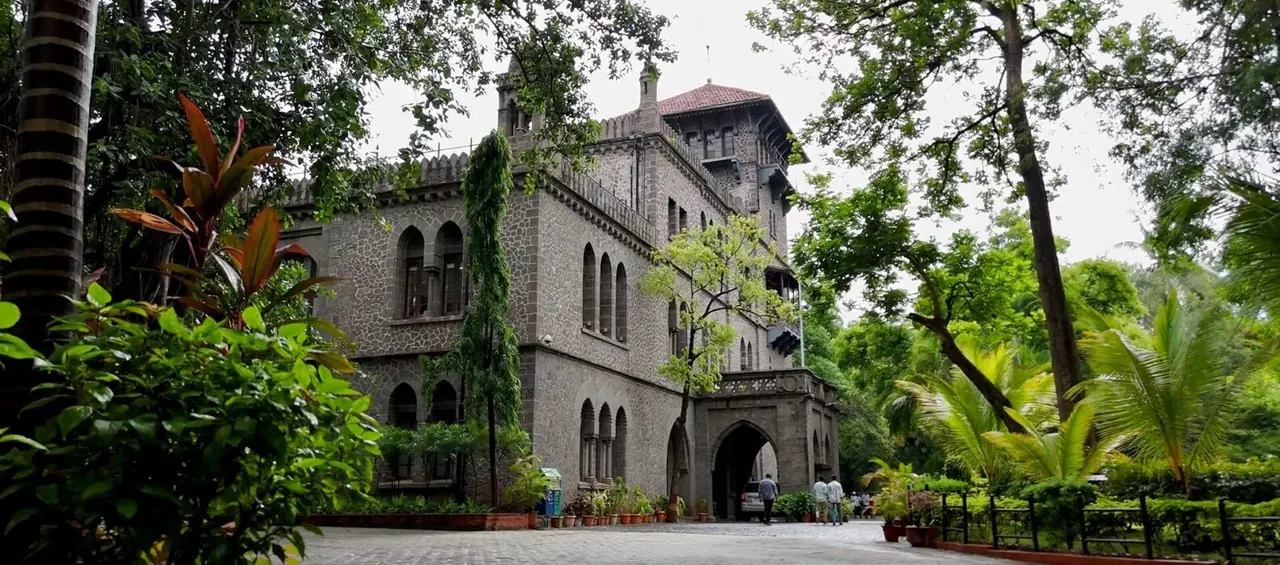
Today COEP runs thirteen academic departments across five schools with six centres of excellence, and about 4,500 students at Bachelor's, Master's and PhD levels. Alongside the nine B.Tech branches and B.Planning it offers twenty-six postgraduate courses in engineering, two postgraduate programmes in business administration, and doctoral research across disciplines.
NIRF 2025: COEP Tech is ranked 90th in Engineering (score 47.31) and 43rd among State Public Universities (score 52.04) in the National Institutional Ranking Framework 2025, published by the Ministry of Education at nirfindia.org. Read that as a public institution competing with far better-funded private and deemed universities — and read it honestly: 90 is a real top-100 position, not a top-10 one, and NIRF rank moves year to year.
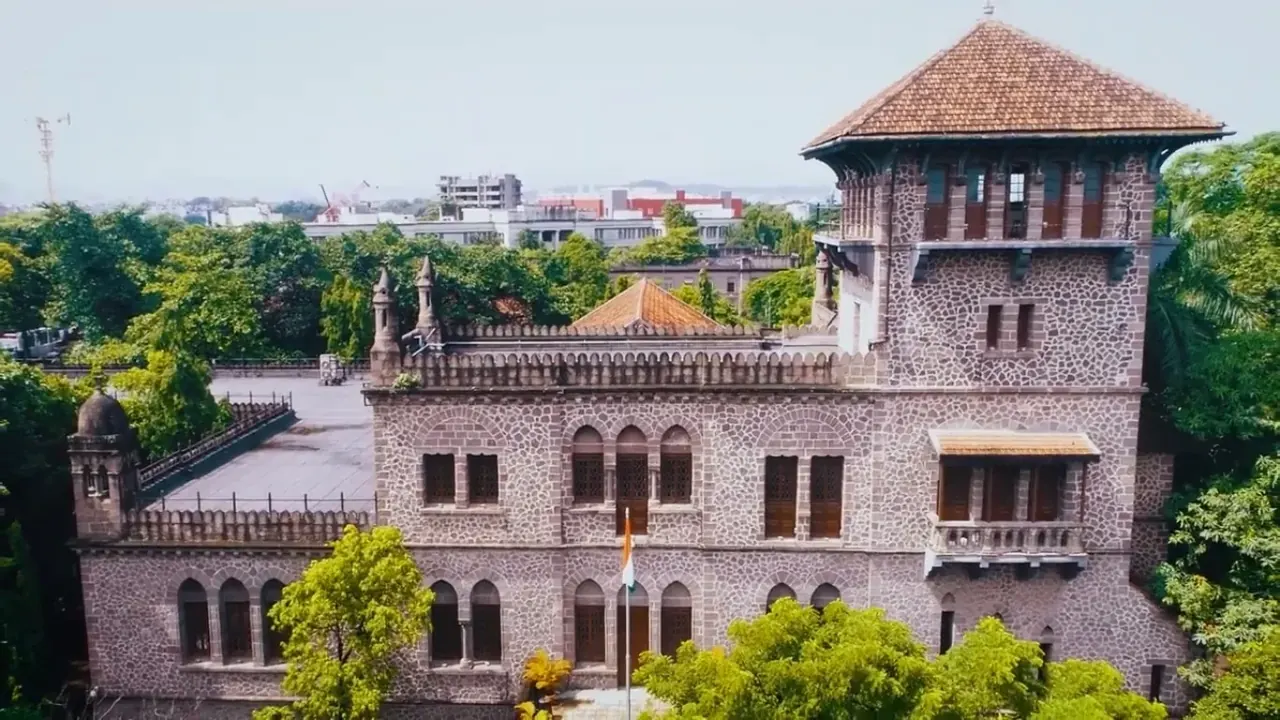
The heritage Main Building is among the most recognisable academic landmarks in Pune, and the campus blends that history with working modern facilities.
- Hostels & library: on-campus hostel accommodation (see the hostel fees above), a large central library with digital journal access, and departmental laboratories.
- Innovation & entrepreneurship: COEP's Bhau Institute of Innovation, Entrepreneurship and Leadership is a well-known startup incubator that has supported student and early-stage ventures.
- The COEP Boat Club: COEP's rowing club, central to campus life and to its annual Regatta.
- Festivals & clubs: COEP is known for flagship student festivals such as MindSpark (technical) and Impressions (cultural), plus a deep network of technical teams and student clubs.
- Alumni network: a vast alumni base across Indian industry, research, civil services and global technology firms.
Free COEP & MHT-CET CAP Counselling from FindUrCollege
Because COEP has no management quota, our value is entirely on the merit side of the process — and that is exactly where good guidance pays off. We help you:
- Read your percentile: map your MHT-CET/JEE percentile to realistic COEP branches against the official closing data above, in your own seat type.
- Build the option form: order COEP branches and backup colleges by course code to maximise your best achievable seat across CAP rounds.
- Get documents right: domicile, category, EWS/TFWS, income and reservation paperwork verified before the deadlines — including the MAHADBT application that decides whether a concession is real.
- Plan backups: shortlist strong alternatives (PICT, VIT Pune, and the other Pune colleges in our B.Tech admission in Pune guide) in case COEP cutoffs move out of reach.
It is free, honest, and built around the legitimate CAP process — no false promises of "direct admission."
Targeting COEP through MHT-CET or JEE? Get a free CAP option-form plan.
💬 Chat with a counsellorFrequently Asked Questions
Extended FAQ: COEP Admission 2026-27
Sources
Every figure on this page traces to one of these documents. Where a source publishes a figure that differs from another official source, we have said so in the section concerned rather than choosing one.
- Fees (AY 2026-27): COEP Technological University, "Fees Structure for Studnets Admitted in AY: 2026-2027 — Programs: B. Tech (First Year B. Tech - All Disciplines & B. Planning)", revised sheet ref. COEP/Revised fee stru./2026-27/UG/780, signed by the Registrar on 1 September 2026 — coeptech.ac.in/wp-content/uploads/2026/09/Revised-Fee-Structure_First-Year_UG-_2026-27.pdf, linked from coeptech.ac.in/useful-links/university-sections/ac-section/fees-structure-1/ · captured 11 September 2026. It replaces ref. 26-27/564 of 29 June 2026. Refund of excess fees: COEP, "Application Form for Refund of Excess Fees Paid (For Students Admitted in Academic Year 2026-27)" — coeptech.ac.in/wp-content/uploads/2026/09/APPLICATION_FORM_FOR_REFUND_OF_EXCESS_FEES_PAID-1-2.pdf · captured 11 September 2026.
- Fees (AY 2025-26): the same first-year B.Tech and B.Planning fee sheet for 2025-26 — copy as published (PDF).
- International fees (AY 2026-27): COEP Technological University, revised CIWGC/FN/OCI/PIO/NRI first-year fee structure, ref. COEP/Revised fee stru./2026-27/FN/781, signed by the Registrar on 1 September 2026 — coeptech.ac.in/wp-content/uploads/2026/09/Revised-Fee-structure_FN_2026-27.pdf · captured 11 September 2026.
- Girls' fee waiver: COEP Technological University circular dated 26 July 2024, implementing the Maharashtra Higher & Technical Education Department resolution of 8 July 2024 — coeptech.ac.in · captured 17 August 2026.
- Hostel: COEP Technological University Hostel Department, "First Year B. Tech. /B. Planning: Boys & Girls — Hostel Admission Notification A.Y. 2026-27", No. COEP Tech./Hostel/2026/ dated 4 August 2026 — coeptech.ac.in/hostel/hostel-admissions/ · captured 17 August 2026. Hostel schedule and seat distribution: the same department's "Schedule & Seat Matrix" notice dated 8 September 2026 — coeptech.ac.in/wp-content/uploads/2026/09/F.Y.-B.-Tech.-B.Plan-Hostel-Admission-BOYSGIRLS-A.Y-2026-27-Schedule-Seat-Matrix.docx · captured 11 September 2026.
- Cutoffs (CAP 2026): State Common Entrance Test Cell, Government of Maharashtra, "Cut Off List for Maharashtra & Minority Seats" for CAP Rounds I, II, III and IV, First Year Four Year Degree Courses in Engineering and Technology 2026-27, rows for institute code 16006 — cappublicdocs2026.blob.core.windows.net/documents/2026ENGG_CAP1_MH_CutOff_V1.pdf and 2026ENGG_CAP2_MH_CutOff.pdf (captured 17 August 2026), 2026ENGG_CAP3_MH_CutOff.pdf (captured 5 September 2026) and 2026ENGG_CAP4_MH_CutOff.pdf (read 11 September 2026); and "Cut Off List for All India Seats of CAP Round - I", 2026-27, p.141 — cappublicdocs2026.blob.core.windows.net/documents/2026ENGG_CAP1_AI_CutOff.pdf (captured 11 September 2026); all linked from fe2026.mahacet.org/StaticPages/HomePage.
- Cutoffs (CAP 2025): Maharashtra State CET Cell, "Provisional Allotment List of CAP Round-I ... 2025-26" for institute 16006 — fe2025.mahacet.org/CAP-I/CAPR-I_16006.pdf · captured 17 August 2026.
- Seat matrix & institute identity: State CET Cell institute summary for code 16006 — fe2026.mahacet.org/StaticPages/frmInstituteSummary · captured 17 August 2026. 2026-27 intake and vacancies: State CET Cell, "Provisional Seat Matrix for CAP Round I", A.Y. 2026-27, published 27 July 2026 — cappublicdocs2026.blob.core.windows.net/documents/2026_fe_seatmatrix_V1.pdf · captured 10 September 2026; and "Provisional Vacant Seats after CAP IV (ACAP)", published 8 September 2026 — cappublicdocs2026.blob.core.windows.net/documents/FE2026_Vacancy_For_ACAP.pdf · captured 11 September 2026. Eligibility and the 80:20 split: State CET Cell, "Information Brochure for Admission to Under Graduate and Post Graduate Technical Courses (2026-27)", FE eligibility and Table A(1) — cappublicdocs2026.blob.core.windows.net/documents/PublicPages/Information_Brochure_UG_PG_2026_27_dt_2_7_2026_DHG_1_Display.pdf · captured 10 September 2026.
- Approved intake & institution type: AICTE Extension of Approval (Corrigendum) for AY 2025-26, F.No. Western/1-44642169323/2025/EOA/Corrigendum-1 dated 18 June 2025 — published on coeptech.ac.in · captured 17 August 2026.
- Placements: COEP Technological University, "Placement Season 2024-2025" report, and COEP Training & Placement Cell, "B. Tech Placement Statistics" — both on coeptech.ac.in · captured 17 August 2026. Median salary: National Institutional Ranking Framework, "Data Submitted by Institution for India Rankings 2025", COEP Technological University [IR-E-U-1257] — nirfindia.org/nirfpdfcdn/2025/pdf/Engineering/IR-E-U-1257.pdf · captured 11 September 2026.
- Accreditation: NAAC Certificate of Accreditation, ref. EC(SC)/139/1st Cycle/MHCOGN111055, dated 10 January 2023 — published on coeptech.ac.in · captured 17 August 2026.
- Rankings: NIRF 2025 Engineering and State Public University rankings, Ministry of Education — nirfindia.org · captured 17 August 2026.
- University profile: COEP Technological University, "About University" — coeptech.ac.in · captured 17 August 2026.
- CAP 2026 status and deadlines: State CET Cell circular 2187 of 7 September 2026 on the cut-off date for all technical-education admissions, A.Y. 2026-27 — cetcell.mahacet.org/wp-content/uploads/2026/09/Cut-off-circular.pdf · read 10 September 2026; the FE 2026-27 Important Dates schedule on fe2026.mahacet.org; and COEP Technological University, "Revised Notification - 8th Sept. 2026, Announcement of University Level ACAP (SPOT) Round(s) During 10th September 2026 to 14th September 2026" for F.Y. B.Tech 2026-27 — coeptech.ac.in/wp-content/uploads/2026/09/updated-on-8-9-26-F.Y-Btech-Spot-Round-Notification-2.pdf · read 11 September 2026.
Found an error on this page? Tell us and we will check it against the source document and correct it. Message us on WhatsApp or email support@findurcollege.com. If you are quoting a fee or cutoff that differs from ours, send the document you saw it in — that is what lets us fix it quickly.
- Data sources: fees from COEP's revised AY 2026-27 fee sheet of 1 September 2026, cutoffs from the Maharashtra State CET Cell's CAP cut-off and allotment lists for institute 16006, intake from the CET Cell's 2026-27 seat matrix and AICTE's 2025-26 approval letter, accreditation from the NAAC certificate, rankings from NIRF 2025, and placements from COEP's own Training & Placement Cell — never from an admissions aggregator.
- Verification: cutoffs are closing figures from rounds already completed and move every year by category, round and seat type; fees are notified year by year. Always verify on coeptech.ac.in and the CET Cell portal before an admission or payment decision.
- Platform status: FindUrCollege is an independent counselling platform and is not affiliated with COEP Technological University.
If COEP Is Out of Reach: The PICT Comparison Set
PICT is the college most COEP candidates weigh next, and unlike COEP it does hold institute-level seats. These guides give PICT's exact cutoff, fee, package, college code and quota position.
Related Engineering Colleges in Pune
Related 2026 Admission Guides
More Pune engineering & MHT-CET guides from FindUrCollege: